


In my decades of driving growth, from SaaS to hospitality, one truth remains constant: a remarkable product, like an unforgettable dish, is only the start. The real challenge is transforming one-time diners into a loyal community and predictable revenue. Too many restaurateurs rely on guesswork or outdated tactics, leaving their growth to chance. This siloed approach, where the kitchen, front-of-house, and marketing operate in separate worlds, is the single biggest barrier to sustainable success. Today's market demands a data-driven, customer-centric strategy that integrates every touchpoint into a cohesive growth engine.
This article moves beyond generic advice. We will dissect a curated list of the best marketing ideas for restaurants, providing a strategic framework to not just attract customers, but to engineer loyalty and drive measurable, bottom-line results. Each idea is presented as a component of a larger system, designed to break down operational silos and create a unified customer experience. We will explore practical, actionable tactics for everything from optimizing your digital footprint with Google My Business to building a powerful referral engine through word-of-mouth marketing.
You will learn how to:
- Implement loyalty programs that actually retain customers.
- Leverage local partnerships for authentic community engagement.
- Turn customer reviews into a powerful reputation-building asset.
This isn't just a list; it is a blueprint for turning your establishment from a local favorite into a market leader. We will focus on strategies that connect directly to revenue, customer lifetime value, and market share. Let’s build your growth engine.
1. Social Media Marketing & User-Generated Content
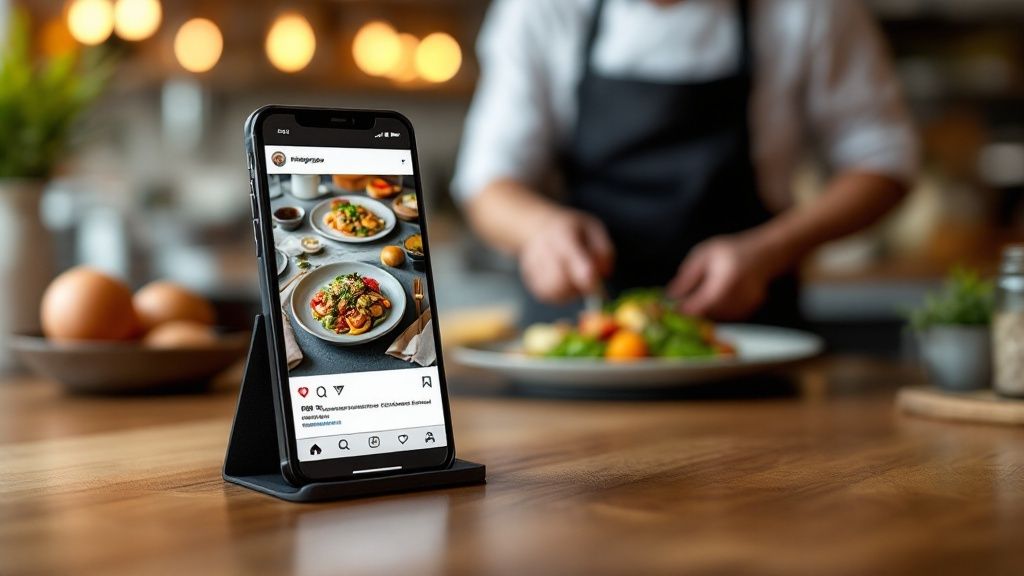
In my years of driving growth, I've seen that the most powerful marketing doesn't just broadcast a message; it builds a community. For restaurants, social media is your digital dining room, and User-Generated Content (UGC) is the modern-day word-of-mouth. This strategy moves beyond simply posting pictures of your food; it's about transforming your customers into an authentic, enthusiastic marketing team who share their experiences because they want to, not because they have to. This is one of the best marketing ideas for restaurants because it builds social proof and trust at a scale traditional advertising can't match.
Why It Works So Well
Modern diners, especially millennials and Gen Z, trust peers over brands. When a potential customer sees a friend's Instagram story featuring your signature dish or a TikTok video capturing your lively atmosphere, the recommendation is inherently more credible. This approach creates a virtuous cycle: you post appealing content, customers visit and create their own content, which then attracts new customers. Chains like Chipotle have mastered this with viral TikTok campaigns, while local eateries build loyal followings by simply reposting their patrons' photos.
Key Insight: Your customers are your most valuable content creators. Empowering them to share their experiences is a low-cost, high-impact strategy that builds an authentic brand presence.
Actionable Implementation Steps
To effectively leverage this strategy, you need a clear plan. It's not just about random posts; it's about fostering an environment where sharing is encouraged and rewarded.
- Create "Instagrammable" Moments: Design a specific dish, a unique corner of your restaurant, or a neon sign with a catchy phrase that begs to be photographed and shared.
- Establish a Unique Hashtag: Develop a simple, memorable hashtag (e.g., #[YourRestaurantName]Eats) and display it prominently on menus, tables, and receipts.
- Engage and Amplify: Actively monitor your brand mentions and hashtag. Promptly like, comment on, and reshare the best customer posts to your own feed or stories, always giving credit to the original creator.
- Run a UGC Contest: Encourage submissions by offering a prize, such as a gift card or a free meal, for the best photo or video of the month featuring your restaurant.
By integrating these tactics, you not only populate your social feeds with authentic content but also build a genuine community around your brand. For a deeper dive into crafting a holistic digital presence, explore these strategies for digital marketing for restaurants on mgxgrowth.com.
2. Email Marketing & Customer Retention Programs
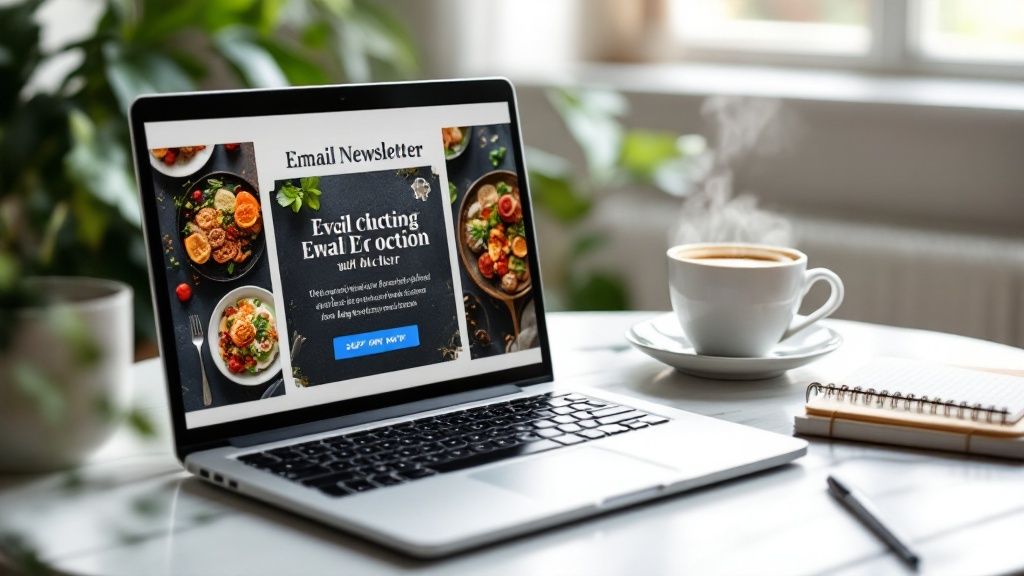
Over my career, I've consistently found that acquiring a new customer is far more expensive than retaining an existing one. Email marketing is your direct line to the guests who already know and appreciate your brand, making it a cornerstone for sustainable growth. This isn't about spamming inboxes; it's about building lasting relationships through targeted, valuable communication. From personalized birthday offers to weekly specials, this strategy keeps your restaurant top-of-mind and transforms one-time visitors into loyal regulars, making it one of the best marketing ideas for restaurants focused on long-term profitability.
Why It Works So Well
Unlike social media, where algorithms control who sees your content, email delivers your message directly to an interested audience. This owned channel gives you complete control. For a customer, receiving a personalized offer or an exclusive invitation to an event feels like being part of an insider's club. It deepens their connection to your brand beyond just the food. Major chains like Panera Bread use sophisticated email programs to drive repeat business, while local pizzerias build a loyal Friday night crowd simply by emailing out their weekly specials.
Key Insight: Your email list is one of your most valuable marketing assets. It's a direct, permission-based communication channel with customers who have explicitly opted-in to hear from you.
Actionable Implementation Steps
An effective email strategy is built on data and thoughtful execution, not just sending out mass blasts. It's about delivering the right message to the right person at the right time.
- Build Your List Strategically: Collect email addresses at every touchpoint: through your online reservation system, Wi-Fi login, point-of-sale, and website. Offer a small incentive, like a free appetizer, for signing up.
- Segment and Personalize: Don't send the same email to everyone. Segment your list based on visit frequency, past orders, or dining preferences to send highly relevant offers that resonate.
- Automate Key Communications: Set up automated emails for crucial moments in the customer journey, such as a welcome series for new subscribers, birthday rewards, and a "we miss you" campaign for lapsed customers.
- Optimize for Impact: Use high-quality, mouth-watering photos of your food. A/B test your subject lines to see what drives higher open rates and schedule sends around lunch or dinner decision-making times.
By treating email as a tool for relationship-building rather than just promotion, you create a powerful engine for customer loyalty and predictable revenue. For more on creating systems that drive repeat business, see how to build a restaurant marketing plan on mgxgrowth.com.
3. Loyalty Programs & Customer Rewards
In my experience, acquiring a new customer can cost five times more than retaining an existing one. That’s why loyalty programs are not just a nice-to-have; they are a fundamental engine for sustainable growth. A well-designed rewards program transforms a transactional relationship into a long-term, loyal connection. It gives customers a compelling reason to choose you over a competitor, directly boosting visit frequency and average spend. This is one of the best marketing ideas for restaurants because it systemizes customer retention and provides invaluable data for personalized marketing.
The following infographic illustrates the foundational structure of a modern, effective loyalty program, showing how key components work together.
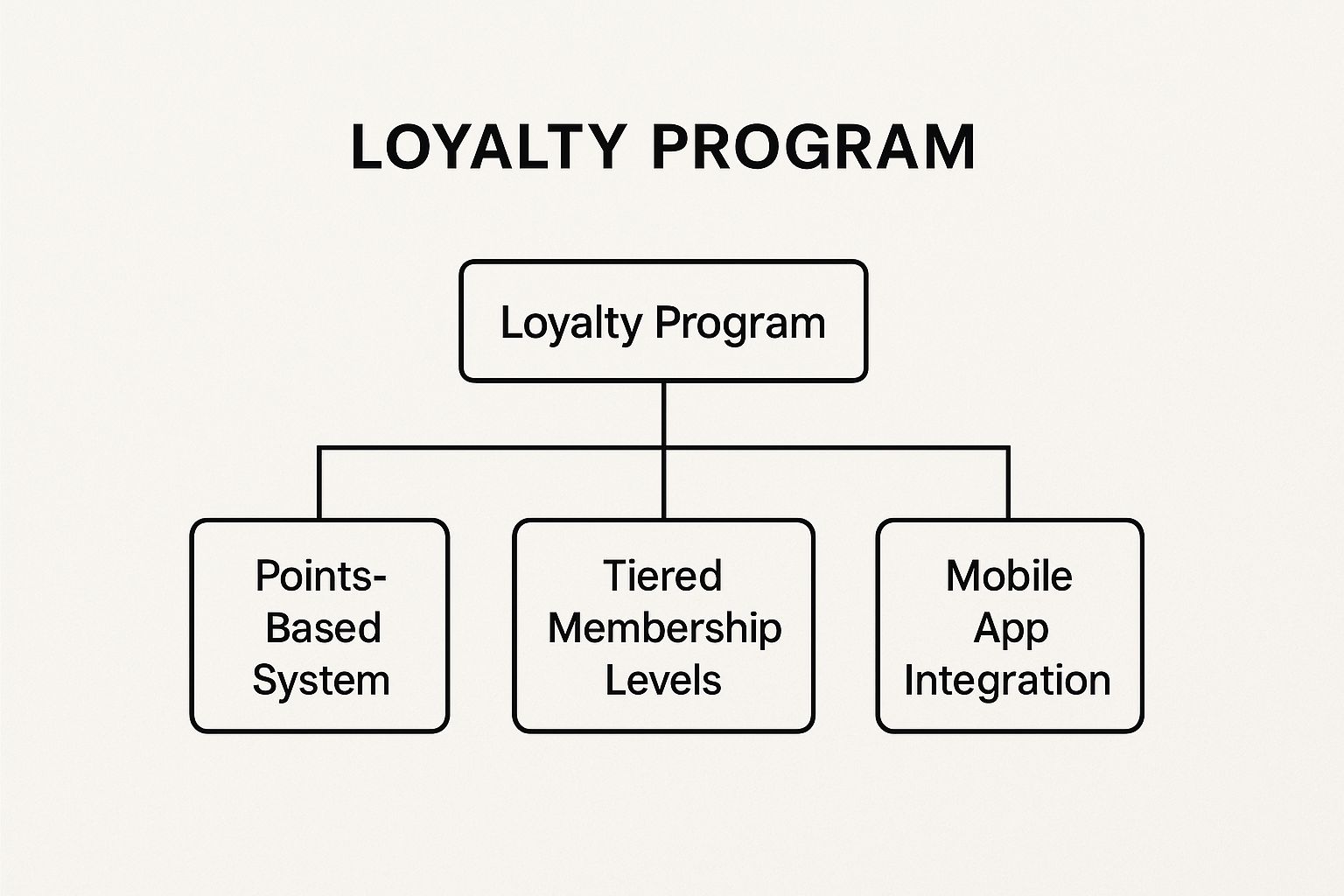
This hierarchy shows that a successful loyalty program integrates a simple points system and tiered rewards within a user-friendly mobile app to maximize engagement.
Why It Works So Well
The psychology is simple: people like to be rewarded for their loyalty. Programs like Starbucks Rewards have perfected this by gamifying the dining experience, making each purchase feel like progress toward a tangible reward. This creates a powerful retention loop. Customers return more often to earn points, and the data you collect from their activity allows you to send personalized offers, like a free pastry on their birthday, that make them feel valued. This data-driven approach turns your loyalty program into a precision marketing tool.
Key Insight: A loyalty program is more than just discounts; it's a data-gathering system that allows you to understand and cater to your best customers, turning them into predictable, recurring revenue streams.
Actionable Implementation Steps
Implementing an effective loyalty program requires a seamless user experience and rewards that genuinely motivate your customers.
- Make Sign-Up Effortless: Integrate sign-up into your POS system using a phone number or email. Offer an immediate incentive, such as 10% off their current order, to encourage instant adoption.
- Offer Valuable and Attainable Rewards: Ensure your rewards are desirable, like a free signature dish or exclusive access to a new menu item. Avoid making the rewards so difficult to achieve that customers lose interest.
- Promote the Program Everywhere: Train staff to actively mention the program to every customer. Use table tents, window decals, and a clear call-to-action on your website and social media to drive enrollment.
- Personalize Communication: Use the data collected to segment your audience. Send targeted emails or push notifications with offers based on a customer’s past orders and visit frequency.
By building a strong rewards system, you invest directly in your most valuable asset: your repeat customers. To learn more about maximizing the financial impact of these relationships, explore these strategies for how to increase customer lifetime value on mgxgrowth.com.
4. Local Community Partnerships & Event Marketing
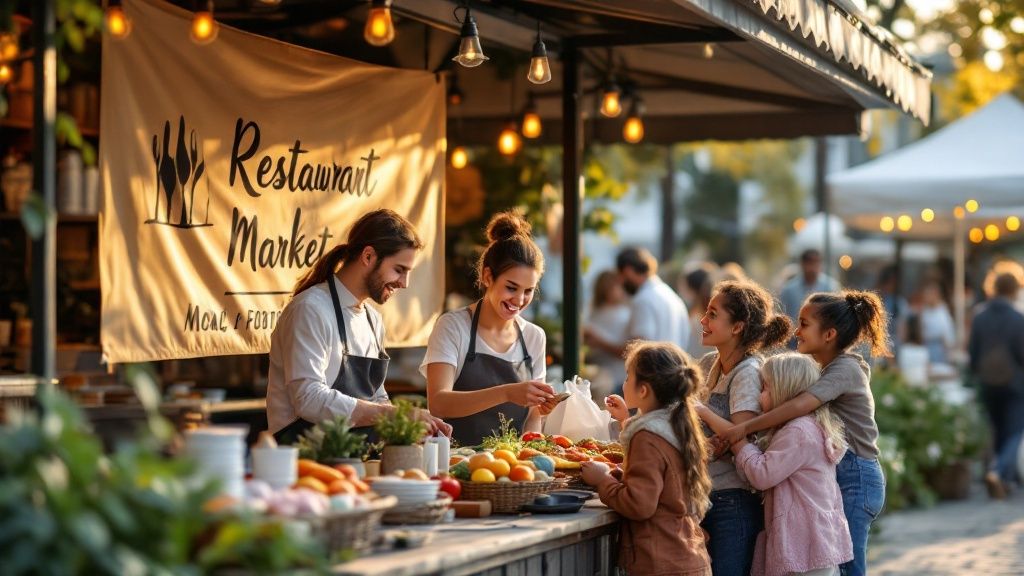
Throughout my career, I've seen that the most resilient brands are deeply woven into the fabric of their communities. For restaurants, your market isn't a faceless demographic; it's the neighborhood you serve. Local partnerships and event marketing transform your establishment from just a place to eat into a genuine community hub. This approach moves you beyond transactional customer relationships and into meaningful, mutually beneficial alliances with other local businesses, schools, and organizations. This is one of the best marketing ideas for restaurants because it builds goodwill and drives hyper-local loyalty that national chains can't easily replicate.
Why It Works So Well
Trust is a local currency. When you sponsor the local Little League team or partner with the nearby movie theater for a "dinner-and-a-show" deal, you're not just advertising; you're investing in the community. This involvement creates powerful brand affinity and top-of-mind awareness. Customers feel good about supporting a business that supports their community, leading to repeat visits and enthusiastic word-of-mouth referrals. A local brewery partnering with a nearby farm for a "farm-to-table" dinner, for instance, not only creates a unique event but also cross-promotes to two distinct but aligned customer bases.
Key Insight: Embedding your restaurant in the local ecosystem creates an economic and social moat. Your community becomes your most loyal marketing channel, advocating for you because you are a part of them.
Actionable Implementation Steps
Effective community marketing requires genuine engagement, not just writing a check. It's about building relationships that provide reciprocal value and show you truly care.
- Identify Aligned Partners: Seek out non-competing local businesses, charities, or teams that share your target audience. Think yoga studios, boutique shops, or arts organizations.
- Create Mutually Beneficial Offers: Develop compelling cross-promotions. For example, offer a 10% discount to patrons who show a ticket stub from the local theater, with the theater doing the same for your receipts.
- Host or Sponsor Community Events: Host a local artist's work, sponsor a 5K charity run, or provide catering for a school fundraiser. These actions generate positive press and direct foot traffic.
- Document and Share Everything: Leverage your partnerships for content. Post photos on social media of you delivering pizzas to the championship-winning high school soccer team, and tag the school and parents.
By integrating these community-focused tactics, you build a loyal customer base and a respected local brand identity that resonates far more deeply than a traditional advertisement ever could.
5. Influencer Marketing & Food Bloggers
In my experience, strategic partnerships are shortcuts to trust. While User-Generated Content builds a broad base, Influencer Marketing allows you to borrow credibility from established local voices. By collaborating with food bloggers and social media personalities, you're not just buying an ad; you're gaining a warm introduction to their loyal, engaged audience. This is one of the best marketing ideas for restaurants because it places your brand directly into the feeds of people who are actively looking for their next great meal, recommended by someone they already trust.
Why It Works So Well
Influencer marketing combines the authenticity of word-of-mouth with the reach of targeted advertising. When a local food blogger with 10,000 dedicated followers posts about your weekend brunch special, it feels like a genuine recommendation, not a corporate message. Their followers trust their taste and are more likely to act on the suggestion. This strategy is incredibly effective for reaching specific demographics, whether you're targeting college students through a TikTok creator or sophisticated diners via a high-end Instagram food photographer.
Key Insight: Influencers act as a trusted filter for their audience. A single authentic endorsement can drive more traffic and build more credibility than a dozen traditional advertisements.
Actionable Implementation Steps
A successful influencer campaign is built on research, clear communication, and mutual respect. It’s about building relationships, not just transactional posts.
- Identify the Right Partners: Look for influencers whose audience demographics and brand aesthetic align with yours. Start with local micro-influencers (1k-100k followers) who often have higher engagement rates and a more dedicated community.
- Define a Clear "Ask": Be specific about your goals. Do you want an Instagram Reel, a series of Stories, or a permanent feed post? Provide a creative brief but allow them the freedom to create content that feels natural to their style.
- Create a Compelling Offer: Your offer can range from a complimentary meal for smaller influencers to a paid collaboration for those with larger reach. An exclusive tasting or a behind-the-scenes experience can make the partnership more appealing.
- Track Your ROI: Provide the influencer with a unique discount code or a special link to track how many customers their post generates. This data is crucial for measuring the campaign's success and justifying future investment.
6. Limited-Time Offers & Seasonal Promotions
In my career, I've seen that one of the most powerful psychological triggers is scarcity. Limited-Time Offers (LTOs) and seasonal promotions tap directly into this, creating a sense of urgency that compels customers to act now. This isn't just about discounting; it's a strategic tool to generate buzz, drive immediate traffic, and encourage trial of new flavors. This is one of the best marketing ideas for restaurants because it breaks routine, creates news, and gives both loyal and potential customers a compelling reason to visit today.
Why It Works So Well
The principle behind LTOs is the fear of missing out (FOMO). When an item is only available for a short period, its perceived value increases dramatically. This creates a powerful sales driver that can lift revenue during slower periods or build hype around a specific season. Think of the cultural phenomenon of Starbucks' Pumpkin Spice Latte or the frenzied return of McDonald's McRib. These campaigns become annual events that customers anticipate, discuss, and share, turning a simple menu item into a major marketing moment.
Key Insight: Urgency is a powerful motivator. A well-executed limited-time offer transforms a casual decision ("Where should we eat?") into an immediate mission ("We have to try that before it's gone!").
Actionable Implementation Steps
To launch a successful LTO, you need to coordinate marketing, operations, and inventory with precision. It’s about creating an experience, not just a product.
- Build Anticipation: Don't just drop the offer. Tease it on social media for a week or two beforehand with sneak-peek photos, countdowns, and behind-the-scenes content.
- Leverage Seasonality: Align your offers with holidays, seasons, or local events. A Valentine's Day prix fixe menu or a summer-exclusive berry dessert feels natural and relevant.
- Create Genuine Scarcity: Be clear about the end date. Phrases like "Only in October" or "Available until we sell out" are much more effective than vague timelines.
- Plan Your Operations: Ensure your kitchen staff is trained and your supply chain is ready. Running out of a heavily promoted LTO on the first day can create negative sentiment.
By carefully planning these promotions, you create spikes in demand and generate valuable buzz that keeps your restaurant top-of-mind. To see how these tactical promotions fit into a larger growth framework, consider how they complement your overall restaurant marketing strategy found on mgxgrowth.com.
7. Google My Business Optimization & Local SEO
In my experience, the battle for customers is often won before they even see your restaurant. It's won on their phone, in a search for "pizza near me" or "best brunch spot." This is where your Google My Business (GMB) profile becomes your most critical digital storefront. Optimizing your GMB and focusing on Local SEO isn't just a suggestion; it is one of the most fundamental and best marketing ideas for restaurants today. It ensures you are not just on the map, but you are the top, most compelling result when a potential diner is hungry and ready to spend.
Why It Works So Well
Modern diners make immediate decisions based on proximity, ratings, and visual appeal. A fully optimized GMB profile provides all this information in one glance within Google Search and Maps. When a local coffee shop appears with dozens of positive reviews, enticing photos of its latte art, and accurate hours, it instantly builds trust and removes friction for the customer. This direct pipeline from search to your front door is incredibly powerful because it captures high-intent customers at the precise moment they are looking for what you offer.
Key Insight: Your Google My Business profile is not just a listing; it's your primary digital billboard for local customers. Owning this space means you control the first impression for the vast majority of potential new diners.
Actionable Implementation Steps
Dominating local search requires consistent attention to detail. Treat your GMB profile as a dynamic tool, not a set-it-and-forget-it listing.
- Claim and Fortify Your Profile: Immediately claim and verify your GMB listing. Fill out every single section completely, from accessibility options to service hours and popular times.
- Curate a Visual Menu: Regularly upload high-quality photos of your dishes, drinks, interior, and exterior. Encourage customers to add their own photos, as these often appear more authentic.
- Master Review Management: Respond to every single review, positive or negative, within 24 hours. A thoughtful response to criticism can be more powerful than a string of positive reviews.
- Utilize Google Posts: Use the "Posts" feature weekly to announce specials, promote events, or highlight a new menu item. These posts appear directly in your search results and keep your profile looking active and current.
8. Customer Review Management & Reputation Building
In my career, I've seen that a brand's reputation is its most valuable, yet most fragile, asset. In the digital age, your online reviews are your reputation. Proactively managing customer reviews isn't just about damage control; it's a strategic pillar for building trust, credibility, and a resilient brand. This approach transforms customer feedback from a passive outcome into an active marketing channel, directly influencing the decisions of potential diners searching for their next meal. This is one of the best marketing ideas for restaurants because it directly impacts your visibility and conversion rate on platforms where customers make their final choices.
Why It Works So Well
Today's diners don't just look at your menu; they scrutinize your reviews on Google, Yelp, and TripAdvisor before ever stepping foot in your door. A high star rating is a powerful magnet, while a single, unaddressed negative review can deter dozens of potential customers. By actively managing your online presence, you demonstrate that you value customer feedback and are committed to excellence. A thoughtful response to a negative review can often win over more new customers than a dozen positive ones, as it shows accountability and a dedication to service recovery.
Key Insight: Your online reputation is a direct reflection of your customer experience. Managing it actively is not optional; it's a fundamental part of modern restaurant marketing that builds trust and drives foot traffic.
Actionable Implementation Steps
Building a five-star reputation requires a systematic, consistent approach. It’s about creating a process to encourage positive feedback while professionally handling criticism.
- Systematize Review Requests: Don't leave reviews to chance. Use QR codes on receipts, follow-up emails for online orders, or a simple verbal request from a server after a great experience to guide happy customers to your preferred review platform.
- Respond to Everything, Promptly: Aim to respond to all reviews, both positive and negative, within 24-48 hours. A simple "Thank you, we're so glad you enjoyed the [dish name]!" to a positive review shows you're listening.
- Master the Art of the Negative Response: When addressing negative feedback, always thank the customer, acknowledge their specific complaint without being defensive, apologize sincerely, and take the conversation offline to resolve it. This public display of professionalism is crucial.
- Analyze Feedback for Operational Improvements: Regularly review your feedback for recurring themes. Are customers consistently mentioning slow service or a specific dish? Use this data as a free, direct line to improving your operations and delighting future guests.
9. Content Marketing & Food Photography
In my decades of driving revenue and market share growth, I’ve seen content marketing paired with professional food photography transform restaurants into local legends. This strategy goes beyond simple promo posts—it weaves rich storytelling, behind-the-scenes videos, chef interviews and recipe sharing into your brand narrative. As one of the best marketing ideas for restaurants, it elevates your dishes from menu items into shareable experiences that engage customers long before they walk through the door.
Why It Works So Well
Modern diners crave authenticity and connection. High-quality images and compelling stories tap into social platforms’ visual nature and boost SEO on your website and blog. When a diner discovers your chef’s signature risotto recipe on your Instagram or follows a YouTube kitchen tour, you build trust, authority and repeat visits. Brands like Food Network and local eateries with consistent visual feeds have seen up to 40% higher engagement rates.
Key Insight: Great photography paired with narrative transforms dishes into emotional touchpoints, sparking social shares and driving reservations.
Actionable Implementation Steps
To activate this approach and solidify your restaurant’s position in search results for “best marketing ideas for restaurants,” follow these practical steps:
- Invest in lighting equipment or hire a professional food stylist and photographer to capture texture, color and plating details
- Develop a consistent visual style—select a color palette, shooting angles and editing presets for brand cohesion
- Create a content calendar mapping blog posts, Instagram carousels, YouTube shorts and email newsletters around menu launches or seasonal themes
- Produce behind-the-scenes videos that showcase kitchen operations, chef techniques or ingredient sourcing to humanize your brand
- Repurpose assets across channels—turn a single photoshoot into social reels, blog headers, website galleries and newsletter hero images
- Embed clear calls-to-action in captions and blogs driving viewers to reserve a table, download a recipe e-book or subscribe for updates
By weaving visual storytelling into your growth strategy, you build lasting brand equity, boost online visibility and inspire diners to choose you first every time.
10. Referral Programs & Word-of-Mouth Marketing
In my experience building sustainable growth models, I've found that the lowest-cost, highest-converting leads often come from a source many overlook: their existing happy customers. A structured referral program transforms casual word-of-mouth recommendations into a predictable acquisition engine. It’s about systematically encouraging your loyal patrons to become active advocates, rewarding them for bringing new faces through your door. This is one of the best marketing ideas for restaurants because it leverages trust to acquire new customers at a fraction of the cost of traditional advertising.
Why It Works So Well
A recommendation from a friend or family member cuts through the marketing noise with unparalleled credibility. When a trusted person says, "You have to try this place," the endorsement is far more powerful than any ad you could run. Referral programs simply add a structured incentive to this natural behavior, encouraging more of it to happen. For example, a local pizzeria might offer a free pizza for a successful referral, while a coffee shop could offer a free drink to both the referrer and their friend, creating a positive experience for everyone involved.
Key Insight: Don't just hope for word-of-mouth, actively engineer it. A well-designed referral program provides the nudge needed to turn satisfied customers into a proactive, high-performance marketing channel.
Actionable Implementation Steps
To launch a successful referral program, the process must be simple for customers and easy for your staff to manage. The goal is to remove all friction and make sharing a seamless part of the dining experience.
- Make the Offer Irresistible and Simple: The reward must be valuable enough to motivate action. A "Give $10, Get $10" offer is clear and mutually beneficial. Avoid complex point systems.
- Provide Easy-to-Use Tools: Equip customers with digital referral cards, unique codes, or simple links they can share via text or social media. The easier it is to share, the more likely they will.
- Train Your Team to Promote It: Your staff are on the front lines. Train them to mention the program to delighted customers at the end of their meal, turning a positive moment into a marketing opportunity.
- Track and Optimize Your Results: Use your POS system or a simple tracking method to monitor which customers are referring, how many new guests they bring in, and what rewards are most effective.
By formalizing this process, you create a powerful, scalable, and cost-effective customer acquisition flywheel. To better understand how this approach impacts your bottom line, explore these strategies for how to reduce customer acquisition cost on mgxgrowth.com.
Top 10 Restaurant Marketing Strategies Comparison
| Strategy | Implementation Complexity 🔄 | Resource Requirements ⚡ | Expected Outcomes 📊 | Ideal Use Cases 💡 | Key Advantages ⭐ |
|---|---|---|---|---|---|
| Social Media Marketing & User-Generated Content | Medium – consistent content creation and platform management required | Moderate – time investment, some paid ads possible | Increased brand visibility and engagement; authentic customer testimonials | Restaurants aiming for broad, authentic brand reach and community building | Cost-effective, builds trust, high engagement potential |
| Email Marketing & Customer Retention Programs | Low to Medium – requires list building and automation setup | Low to Moderate – email tools and content creation | High ROI, repeat business, measurable customer engagement | Businesses focused on retention and targeted communication | Direct communication, measurable results, cost-effective |
| Loyalty Programs & Customer Rewards | High – complex setup with technology and staff training | High – system setup, ongoing management, rewards cost | Increased visit frequency, higher spend per customer, detailed data | Restaurants aiming to maximize customer lifetime value | Strong retention, personalized offers, measurable ROI |
| Local Community Partnerships & Event Marketing | Medium – relationship building and event coordination | Low to Moderate – time investment, possible sponsorship costs | Strong local brand loyalty and community goodwill | Local businesses focusing on community engagement and local media presence | Builds authentic connections, cost-effective, positive PR |
| Influencer Marketing & Food Bloggers | Medium to High – influencer vetting, coordination, contract management | Moderate to High – influencer fees, content coordination | Increased brand awareness, potential viral reach, targeted demographic | Restaurants wanting to tap into established audiences quickly | Access to engaged audiences, authentic endorsements |
| Limited-Time Offers & Seasonal Promotions | Medium – planning, inventory, and staff training needed | Moderate – marketing materials, discounts, inventory management | Immediate sales boost, increased visit frequency, buzz creation | Businesses aiming for quick impact and testing new menu items | Drives urgency, creates excitement, opportunity for premium pricing |
| Google My Business Optimization & Local SEO | Low to Medium – profile management and review monitoring | Low – time investment, no direct cost | Increased local search visibility and foot traffic | Any local restaurant seeking improved online discovery | Free tool, enhances local SEO, builds credibility |
| Customer Review Management & Reputation Building | Medium – ongoing monitoring and timely responses | Low to Moderate – staff time and tools for monitoring | Improved trust and credibility, better search rankings | Restaurants focused on online reputation and customer trust | Builds trust, provides feedback, improves SEO |
| Content Marketing & Food Photography | Medium to High – regular high-quality content creation | Moderate – equipment costs, professional services | Builds brand personality, emotional connection, multi-channel use | Restaurants investing in long-term brand building | Reusable content, enhances engagement, establishes expertise |
| Referral Programs & Word-of-Mouth Marketing | Medium – program design, tracking, and promotion | Low to Moderate – rewards and tracking system | Higher customer acquisition with strong retention | Restaurants with loyal customer base seeking organic growth | High conversion, low acquisition cost, builds community |
From Ideas to Execution: Your Next Growth Chapter
We have explored a comprehensive suite of ten powerful marketing strategies, from leveraging user-generated content and optimizing your Google My Business profile to building robust loyalty programs and fostering community partnerships. Each of these tactics holds the potential to attract new customers and drive repeat business. However, after decades of driving growth across industries, I can tell you that the secret to market leadership is never found in a single idea or a standalone campaign.
The real differentiator is integration. The most successful restaurants don't just execute a list of marketing ideas; they build a cohesive, data-driven growth engine. They create a system where each component amplifies the others, turning isolated actions into a compounding force for revenue and brand equity.
The Power of a Unified Growth System
Think of it this way: a powerful loyalty program (Idea #3) is not just a punch card; it's a data goldmine that fuels your personalized email marketing (Idea #2). A well-executed local community event (Idea #4) doesn't just fill seats for one night; it generates a wave of authentic social media content (Idea #1) and positive customer reviews (Idea #8) that live on for months. This is the difference between simply running marketing campaigns and architecting a sustainable growth framework.
The common thread connecting these best marketing ideas for restaurants is a relentless focus on the customer, underpinned by data. True growth requires breaking down the traditional silos that exist in many businesses. Your kitchen, your front-of-house staff, and your marketing efforts cannot operate in isolation. When customer feedback from your review management system informs menu development and your front-of-house team is trained to promote your referral program, you create a seamless experience that turns guests into advocates.
Your Actionable Path Forward
The sheer volume of possibilities can feel overwhelming, but progress is about focused execution, not doing everything at once. Your next steps should be strategic and measurable.
- Audit and Prioritize: Begin by assessing your current marketing activities against the ten ideas we've covered. Where are your biggest gaps and your most significant opportunities? Don't chase a shiny new trend; identify the one or two strategies that will have the most immediate impact on your specific business goals, whether that's increasing foot traffic on Tuesdays or boosting online orders.
- Master and Measure: Dedicate your resources to mastering those selected strategies. If you choose Google My Business optimization, go all-in. If it's building a loyalty program, design it to be irresistible. Crucially, define your key performance indicators (KPIs) from day one. Track everything, from customer acquisition cost to lifetime value, and be ruthless in analyzing the results.
- Scale and Integrate: Once a strategy is proven and optimized, then you can scale it. As you gain momentum, begin layering in the next complementary tactic. Use the data from your first initiative to inform the second, creating the flywheel effect we discussed. This methodical, data-backed approach is how you build an unbreakable marketing foundation that consistently drives profit and market share.
Ultimately, your restaurant's growth journey is not about finding more ideas. It's about executing the right ones with precision, discipline, and a deep understanding of your customer. It’s about shifting from a checklist of tactics to a unified, customer-centric culture obsessed with results. This is how you transform your restaurant from a local favorite into a market leader.
If you're ready to move beyond isolated tactics and build a cohesive, AI-powered growth system that drives measurable EBITDA and market share, the team at MGXGrowth can architect that transformation for you. We specialize in turning data into a competitive advantage and marketing ideas into a scalable engine for profit. Visit us at MGXGrowth to learn how we can engineer your next growth chapter.
