


In my decades of driving growth across industries, I've learned one universal truth: complacency is the silent killer of market leadership. This is especially true in hospitality, where margins are notoriously thin and competition is fierce. The old playbook of great food and good service is no longer enough to guarantee success.
The market has fundamentally shifted. Diners now expect personalized, technology-enabled experiences both inside and outside your four walls. As a growth strategist, I see this not as a threat, but as an unprecedented opportunity for those willing to adapt. The key is to break down the traditional silos between marketing, operations, and finance. True growth is unlocked when these teams work in concert, guided by a singular, data-driven view of the customer journey.
The restaurant revenue growth strategies detailed in this article are not theoretical concepts; they are battle-tested frameworks I have implemented to drive measurable top- and bottom-line performance. These are the levers that separate the brands that merely survive from those that dominate their market. From AI-powered menu engineering and dynamic pricing to optimizing your delivery channels and building powerful loyalty systems, we will cover actionable tactics for every facet of your operation. Let's build your blueprint for sustainable, profitable growth.
1. Menu Engineering and Price Optimization
Your menu isn't just a list of what you sell; it's the most powerful internal marketing tool you have. Menu engineering is the data-driven practice of analyzing item profitability and popularity to strategically design a menu that maximizes revenue. This is one of the most fundamental restaurant revenue growth strategies I've implemented, delivering significant margin improvements without alienating customers.
The core concept, pioneered by Michael Kasavana, involves categorizing every dish into one of four quadrants based on its contribution margin (profitability) and sales volume (popularity):
- Stars: High profitability, high popularity. Your best performers.
- Plow Horses: Low profitability, high popularity. Crowd-pleasers that need a margin boost.
- Puzzles: High profitability, low popularity. Hidden gems that need better marketing.
- Dogs: Low profitability, low popularity. Candidates for removal or complete reinvention.
This systematic approach transforms your menu from a simple inventory list into a strategic asset. By understanding this matrix, you can make informed decisions about item placement, pricing, and promotion to guide guest choices toward your most profitable offerings.
The Menu Engineering Workflow
The following infographic illustrates the three-step process for applying menu engineering principles to your restaurant.
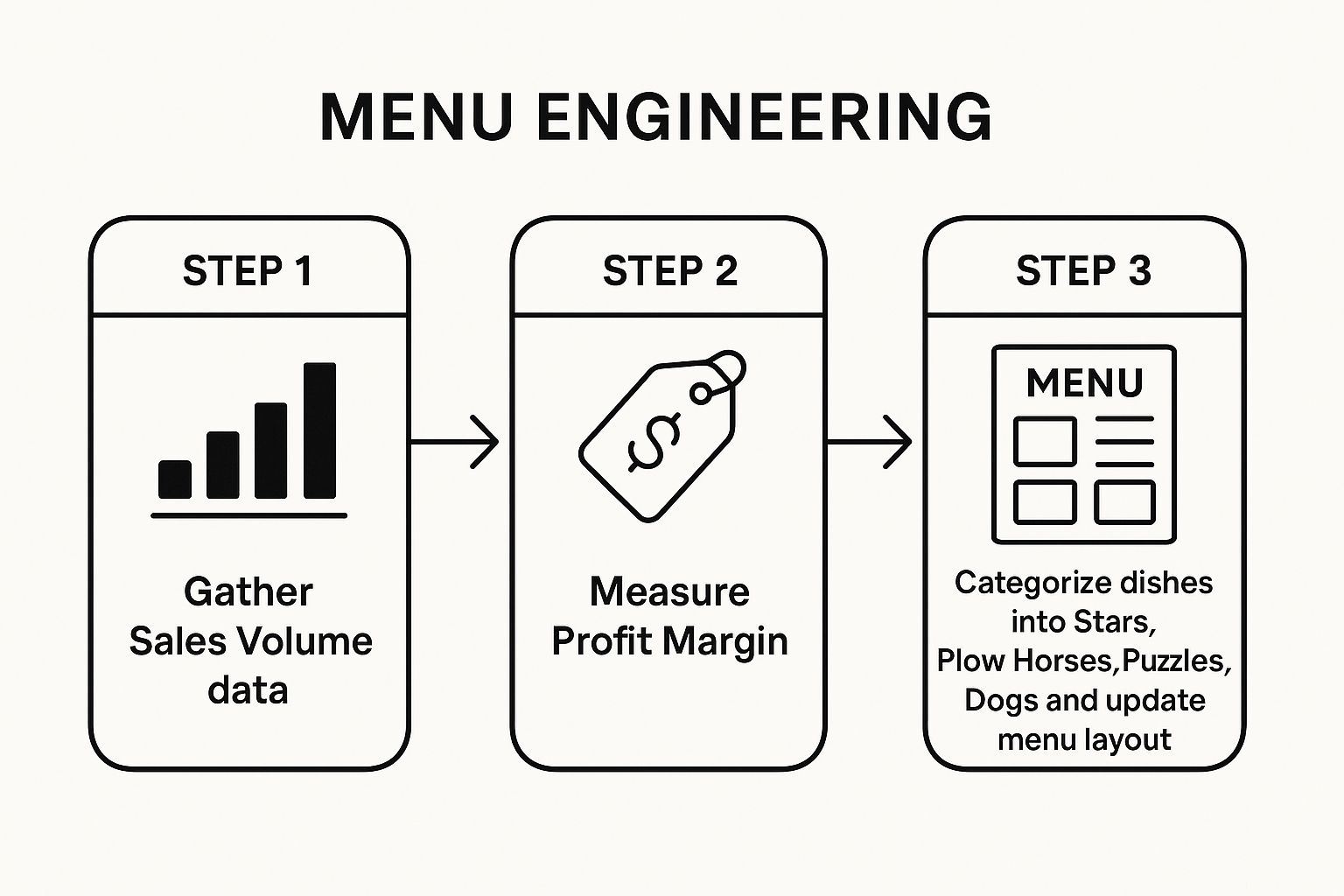
This process shows how to move from raw POS data to a fully optimized menu layout that actively boosts your bottom line.
Actionable Pricing and Design Tips
Once you've categorized your items, apply these optimization tactics:
- Showcase Your Stars: Position your most profitable and popular items where the eye naturally travels first, often the upper-right corner of the menu (the "golden triangle").
- Optimize Prices Subtly: Remove dollar signs ($) and avoid listing prices in a neat column, which encourages price shopping. Instead, embed the price at the end of the item description.
- Limit Choices: To prevent "decision paralysis," aim for no more than seven items per menu category. This helps guide customers and speeds up ordering times.
2. Dynamic Pricing and Revenue Management
Dynamic pricing is the practice of adjusting menu prices in real-time based on demand, time of day, day of week, and other market factors. This strategy, borrowed from the airline and hotel industries, is a powerful lever for revenue management that I've seen successfully adapted for hospitality. It allows restaurants to maximize revenue during peak times and stimulate traffic during slower periods.
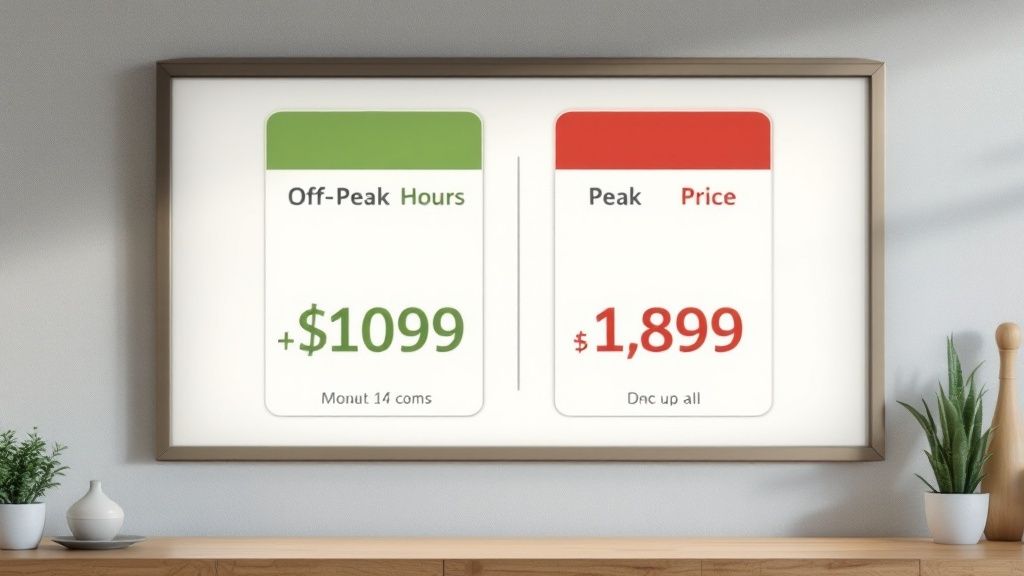
The rise of digital menu boards and online ordering platforms has made this sophisticated approach accessible. For example, Wendy's announced plans for "surge pricing" starting in 2025, while delivery apps like DoorDash have long used it during peak hours. This isn't just for fast-food giants; fine dining establishments adjust tasting menu prices for special events, and countless bars use happy hour pricing to drive off-peak sales. This is a core component of modern restaurant revenue growth strategies.
The Dynamic Pricing Workflow
The following infographic illustrates the three-step process for applying dynamic pricing principles to your restaurant.
This process shows how to leverage your sales data to create a flexible pricing structure that adapts to real-world demand, boosting both traffic and profitability. For a deeper dive into this concept, you can learn more about how to increase revenue on mgxgrowth.com.
Actionable Pricing and Design Tips
Once you've analyzed your demand patterns, apply these implementation tactics:
- Start with Time-Based Pricing: Before implementing complex demand-based models, begin with simpler time-based rules like happy hours, early-bird specials, or weekend surcharges.
- Communicate Clearly: Use digital menu boards and app notifications to clearly communicate price changes. Transparency is key to avoiding customer frustration and maintaining trust.
- Use Data to Find Opportunities: Analyze your POS data to identify optimal pricing windows. Look for patterns in daily, weekly, and seasonal sales to inform your strategy.
3. Delivery and Third-Party Platform Optimization
The rise of off-premise dining is not a trend; it's a fundamental shift in customer behavior. A well-executed delivery strategy, whether through third-party platforms like Uber Eats and DoorDash or a direct channel, is a non-negotiable component of modern restaurant revenue growth strategies. In my experience, treating delivery as an integrated business unit, rather than an afterthought, is what separates the brands that thrive from those that merely survive this shift.
The core challenge isn't just being on these platforms; it's mastering them. This means strategically managing your menu, pricing, and operations to protect margins against commission fees while maximizing visibility and volume. From virtual kitchens like MrBeast Burger to established chains like Chili's, which now generates over 20% of its sales from delivery, the data clearly shows that a dedicated off-premise strategy is critical for capturing incremental revenue.
The Delivery Optimization Workflow
Your goal is to build a profitable off-premise engine that complements your in-house dining experience. This involves a continuous cycle of menu adaptation, operational excellence, and financial analysis to turn delivery from a costly necessity into a powerful growth channel. By controlling the variables you can, you protect the customer experience and your bottom line.
Actionable Delivery and Platform Tips
Once you've committed to an off-premise strategy, apply these optimization tactics:
- Create Delivery-Specific Menus: Design a limited, higher-margin menu with items that travel well. This protects food quality, simplifies kitchen operations, and helps offset commission fees.
- Invest in Quality Packaging: The first impression for a delivery customer is the packaging. Use branded, functional containers that maintain temperature and prevent spills to ensure the at-home experience reflects your restaurant's quality.
- Optimize for Mobile Discovery: Use high-quality photos and keyword-rich descriptions on third-party apps. Think like a customer searching on their phone; clear, appealing listings are essential for conversion.
- Explore Direct Delivery: While third-party apps offer reach, a direct ordering system via your own website or app eliminates commission fees. Promote this channel to loyal customers to retain a higher portion of the revenue.
4. Loyalty Programs and Customer Retention
Acquiring a new customer is far more expensive than retaining an existing one. A well-designed loyalty program is a powerful engine for customer retention, turning one-time visitors into brand advocates. This strategy involves creating structured incentives that reward repeat business, fostering a direct relationship with your most valuable patrons and significantly boosting their lifetime value.
The core principle is to make customers feel recognized and valued for their continued patronage. Modern programs leverage technology to move beyond simple punch cards, using data analytics to understand purchasing habits and deliver personalized offers. By tracking behavior, you can create a feedback loop that not only encourages repeat visits but also increases average order value. This is a crucial restaurant revenue growth strategy that builds a predictable, recurring income stream.
The Loyalty Program Workflow
From my experience, a successful program isn't just about discounts; it's about building a community and creating a seamless customer journey. The goal is to integrate the program so deeply into the dining experience that it becomes an indispensable part of their interaction with your brand, as seen with giants like Starbucks and Chipotle. This transforms transactional relationships into emotional connections, which is the cornerstone of long-term loyalty.
The most effective programs are simple to join, easy to use, and offer compelling, personalized rewards that keep customers engaged and coming back for more.
Actionable Loyalty and Retention Tips
Once you're ready to build or refine your program, apply these optimization tactics:
- Offer an Instant Incentive: Encourage immediate sign-ups by providing a reward on the spot, like a free drink or a discount on their current bill. This removes friction and demonstrates immediate value.
- Personalize the Experience: Use the data collected to send targeted offers. If a customer frequently orders a specific item, send them a special discount for it or a "buy one, get one" deal to share with a friend.
- Implement a Tiered System: Create aspirational levels (e.g., Silver, Gold, Platinum) that unlock better rewards as customers spend more. This gamifies the experience and encourages higher frequency and spending. You can learn more about how this strategy increases customer lifetime value on mgxgrowth.com.
5. Catering and Large Order Services
Moving beyond the four walls of your establishment to serve groups is a powerful way to add a significant, high-margin revenue stream. Catering and large order services transform your kitchen's existing capacity into a new business unit, serving corporate events, private parties, and community gatherings. This is a classic restaurant revenue growth strategy that I've seen deliver exceptional returns by tapping into a different, often more predictable, customer segment.
The core concept is to package your restaurant's offerings for bulk consumption, creating a separate but complementary service. Unlike dine-in service, which relies on individual transactions, catering focuses on high-volume, single-payment orders. For example, Panera Bread has built a massive B2B business with its corporate catering, while Chipotle's build-your-own bars have become a staple for casual events. This strategy unlocks revenue from a market segment that may never have walked through your door for a single meal.
By creating systems to handle these large-format orders, you diversify your income and build deeper relationships within the local business and event community, turning your brand into an integral part of your customers' professional and personal lives.
Actionable Catering and Service Tips
Once you're ready to launch a catering program, apply these optimization tactics:
- Build Local Partnerships: Actively network with local office managers, event planners, and HR departments. Offer a complimentary tasting or a special introductory discount to get your first corporate client.
- Create Tiered Packages: Design catering menus with clear, tiered packages (e.g., "The Basic Lunch Box," "The Executive Spread") at different price points. This simplifies the ordering process and helps clients quickly find an option that fits their budget.
- Invest in Logistics: Ensure a professional presentation with high-quality, branded packaging and reliable transport equipment to keep food at the correct temperature. A seamless delivery experience is non-negotiable for repeat business.
- Protect Your Operations: Always require advance notice and a non-refundable deposit for large orders. This secures the commitment and protects your business from last-minute cancellations after you've already purchased inventory.
6. Upselling and Cross-selling Techniques
Every customer interaction is an opportunity to enhance their experience and, consequently, increase your revenue. Upselling and cross-selling are foundational sales techniques that train your team to strategically suggest additional items or upgrades, directly boosting average check size. This isn't about being pushy; it's about thoughtful, value-added service that guides guests toward a better meal.
The concept, famously perfected by Ray Kroc with McDonald's "Would you like fries with that?", is one of the most direct restaurant revenue growth strategies. It relies on training your staff to act as trusted guides rather than simple order-takers. Whether a server suggests a specific wine pairing, a barista recommends a larger size, or your online ordering system prompts a dessert add-on, you are actively increasing the value of each transaction while improving the guest experience.
The Art of the Suggestion
A successful upselling and cross-selling program is built on genuine recommendations, not robotic scripts. Your team needs to understand the menu deeply and be empowered to make suggestions that truly complement a guest's initial order. This transforms a simple transaction into a curated dining experience, building trust and encouraging higher spending. For multi-location brands, standardizing this training is key to consistent revenue lifts across all outlets.
Actionable Upselling and Cross-selling Tips
Implement these tactics to systematically increase your average ticket value:
- Train for Genuine Recommendations: Coach your team to listen to customer cues and suggest items that align with their stated preferences. For example, if a guest orders a spicy dish, recommend a cooling beverage that pairs well.
- Focus on Complementary Items: Prioritize suggestions that naturally fit together. Suggesting garlic bread with a pasta dish or a side salad with a steak feels helpful, not forced.
- Incentivize Performance: Create a simple, transparent incentive program for your staff. Rewarding the team members who are most effective at upselling can foster friendly competition and drive results.
- Leverage Your POS Data: Analyze your sales data to identify the most popular and profitable pairings. Use this information to guide your team's suggestions and to program automated prompts in your online ordering system.
7. Private Events and Venue Rental
Your restaurant's physical space is a valuable asset that often sits underutilized during off-peak hours. Transforming your establishment into a sought-after venue for private events is a powerful restaurant revenue growth strategy that creates a high-margin income stream independent of your regular service. This approach involves marketing your space for corporate meetings, weddings, parties, and other special occasions.
This strategy capitalizes on existing infrastructure to generate guaranteed revenue. Instead of relying on unpredictable daily foot traffic, you secure income through contracted bookings, often with higher per-head spending than typical diners. Restaurants offering private dining rooms, breweries hosting receptions, or rooftop bars renting space for cocktail parties are all excellent examples of this model in action. By monetizing downtime, you turn a fixed cost, your rent, into a dynamic revenue generator.
The Event Booking Blueprint
This isn't just about waiting for the phone to ring; it requires a proactive system. You must package your space, services, and culinary offerings into an attractive, marketable product. This means defining what makes your venue unique, from its ambiance to its capacity, and building a process to manage inquiries, contracts, and execution seamlessly. A structured approach ensures profitability and a high-quality experience that leads to repeat business and referrals.
Actionable Event and Rental Tips
Once you decide to market your venue, apply these focused tactics:
- Create Tiered Packages: Develop several event packages to cater to different needs and budgets, from a basic room rental to an all-inclusive offering with a custom menu, bar service, and decor.
- Build Local Partnerships: Actively network with local event planners, corporate HR departments, and hotels. Offer them a commission or referral fee for bookings they bring to you.
- Invest in Flexibility: Use furniture and decor that can be easily reconfigured. This allows you to accommodate a corporate board meeting one day and a celebratory dinner the next.
- Secure Bookings with Contracts: Always use a clear, detailed contract for every event. Require a non-refundable deposit to protect against last-minute cancellations and secure your revenue.
8. Retail and Branded Merchandise Sales
Your restaurant's brand is a powerful asset that can generate revenue far beyond your dining room walls. Creating a retail line of branded merchandise and signature products is a highly effective strategy to diversify income, enhance brand loyalty, and extend your customer experience. This approach transforms your most loyal patrons into brand ambassadors and creates new, high-margin revenue channels.
The concept is to monetize your restaurant's unique identity by selling physical goods. This can range from simple branded t-shirts and hats to bottling your signature BBQ sauce or selling take-home meal kits of your most popular dishes. By offering tangible pieces of your brand, you allow customers to bring a part of their dining experience home, which strengthens their connection to your restaurant and keeps you top-of-mind.
The Retail and Merchandise Workflow
This approach turns your intellectual property, like recipes and brand logos, into sellable assets. Consider the path from a beloved menu item to a retail product: a customer's favorite house dressing becomes a bottled product on local grocery shelves, or your quirky restaurant theme inspires a line of apparel. It's about capturing what makes your brand special and packaging it for sale.
This method is one of the most scalable restaurant revenue growth strategies I've seen, as it builds on existing brand equity to create new, often passive, income streams. It's a natural extension for brands with a strong, recognizable identity and a dedicated customer base.
Actionable Retail and Merchandising Tips
Once you've identified potential products, apply these optimization tactics:
- Start with Signature Items: Begin by bottling your most requested sauce, packaging your unique spice blend, or selling gift cards. These are proven winners with built-in demand.
- Focus on Quality and Packaging: Ensure your retail products reflect the same quality as your dining experience. Professional packaging is crucial for shelf appeal and brand perception.
- Price for Profit: Analyze your production costs, including packaging and labor, to set a retail price that delivers a healthy profit margin while remaining attractive to customers.
- Cross-Promote Channels: Use your retail products to drive restaurant traffic (e.g., a coupon with every sauce purchase) and use your restaurant to promote retail sales (e.g., in-store displays and menu mentions).
9. Digital Marketing and Social Media Monetization
Your online presence is now as critical as your physical location. Digital marketing is no longer just about having a website; it's about actively turning online engagement into in-store traffic and sales. Leveraging social media and targeted advertising is one of the most effective restaurant revenue growth strategies I've seen, allowing brands to connect directly with diners and drive measurable results.
The core principle is to create a compelling digital storefront that mirrors your restaurant's unique atmosphere and culinary quality. This involves showcasing your food through high-quality visuals, engaging with your community, and strategically using paid advertising to reach new, relevant audiences. In today's market, a viral TikTok video or an influencer collaboration can fill your tables for weeks.
This strategy transforms your social media accounts from passive profiles into active revenue-generating channels. By consistently creating appealing content and building an authentic online community, you can cultivate a loyal following that translates directly into increased foot traffic and a stronger bottom line.
Key Platforms and Monetization Tactics
Implementing a successful digital strategy requires a multi-platform approach focused on visual storytelling and community engagement.
This visual approach shows how to capture the essence of your brand and turn passive scrolling into active dining decisions.
Actionable Digital Marketing Tips
Once you've established your presence, apply these monetization tactics:
- Create "Instagrammable" Experiences: Design dishes, drinks, and even parts of your decor with social sharing in mind. A unique presentation or photogenic corner encourages user-generated content, which is free marketing.
- Partner with Micro-Influencers: Collaborate with local food bloggers and influencers who have a highly engaged, geographically relevant audience. Their endorsement often feels more authentic and can drive immediate local traffic.
- Utilize Geo-Targeted Ads: Run paid ad campaigns on platforms like Facebook, Instagram, and Google that specifically target users within a certain radius of your restaurant. Promote special offers, new menu items, or events to attract nearby customers. A data-driven approach is key to optimizing these campaigns for maximum ROI. Learn more about crafting a data-driven marketing strategy on mgxgrowth.com.
9 Restaurant Revenue Growth Strategies Comparison
| Strategy | Implementation Complexity 🔄 | Resource Requirements ⚡ | Expected Outcomes 📊 | Ideal Use Cases 💡 | Key Advantages ⭐ |
|---|---|---|---|---|---|
| Menu Engineering and Price Optimization | Medium – requires data tracking and analysis | Moderate – analytics tools and staff time | Increased profit margins (10-15%), reduced waste, better kitchen efficiency | Restaurants aiming to maximize menu profitability and visibility | Clear metrics, systematic menu improvements |
| Dynamic Pricing and Revenue Management | High – needs real-time pricing systems | High – POS integration, data analytics | Revenue boost (3-9%), better demand balancing | High-traffic venues, fast-casual or digital-menu restaurants | Maximizes revenue during peaks, flexible pricing |
| Delivery and Third-Party Platform Optimization | Medium – multi-platform integration needed | Moderate – packaging, platform fees | Expanded market reach, delivery revenue stream | Restaurants targeting off-premise customers | Access to delivery market, data insights |
| Loyalty Programs and Customer Retention | Medium – ongoing management, tech needed | Moderate – app/platform development | Increased customer lifetime value (25-95%), more frequent visits | Businesses focusing on repeat customers | Data-driven personalization, higher order value |
| Catering and Large Order Services | High – operational and staffing changes | High – equipment, delivery logistics | High order values ($200+), recurring corporate revenue | Restaurants expanding into B2B or event markets | Better margins, predictable revenue |
| Upselling and Cross-selling Techniques | Low to Medium – staff training focus | Low – training and incentive programs | Increased average check size (10-30%) | All restaurant types seeking incremental sales | High ROI, improved guest satisfaction |
| Private Events and Venue Rental | Medium – space and event management required | Moderate – marketing, equipment | Revenue in off-hours, repeat bookings | Venues with flexible space and slower periods | Builds brand awareness, high-margin packages |
| Retail and Branded Merchandise Sales | Medium – product development and inventory | Moderate – inventory and packaging | New high-margin revenue stream | Established brands with signature products | Extends brand reach, additional touchpoints |
| Digital Marketing and Social Media Monetization | Medium – content creation and management | Moderate – social media tools and staff | Increased traffic, measurable ROI, viral potential | Restaurants leveraging digital presence | Cost-effective, direct customer engagement |
From Strategy to Execution: Architecting Your Next Growth Chapter
Throughout my career advising brands from SaaS to hospitality, I've seen a consistent pattern: sustainable growth is never accidental. We've navigated a comprehensive suite of restaurant revenue growth strategies in this article, from the granular details of menu engineering to the expansive potential of digital monetization. Each tactic, whether it's optimizing third-party delivery platforms or launching a sophisticated loyalty program, represents a powerful lever you can pull to increase top-line performance.
However, the most profound insight isn't found within any single strategy. The true differentiator between brands that merely survive and those that dominate their market is integration. These are not nine separate items on a checklist; they are interconnected components of a single, cohesive growth engine.
The Power of an Integrated Growth System
Think of your business as an ecosystem. The data harvested from your dynamic pricing experiments should directly inform the promotions you offer to your most loyal customers. The success of specific upselling techniques observed by your front-of-house staff must be analyzed and replicated within your online ordering system. When you start connecting these dots, you unlock compounding returns.
"True revenue acceleration happens when departmental silos are dismantled. When marketing, operations, and finance share a unified view of the customer and a common language of data, the entire organization moves faster and smarter."
This integrated approach transforms isolated tactics into a systematic, predictable machine for generating revenue. It’s about building a culture that is relentlessly customer-centric and data-driven, where every team understands its role in the larger mission of growth.
Your Actionable Path Forward
The path to doubling your revenue can feel daunting, but it begins with focused, intentional action. Don't attempt to implement all nine strategies at once. Instead, identify the one or two areas that represent the most significant opportunity for your unique business right now.
- Audit and Prioritize: Where is the most friction in your customer journey? Where are you leaving the most money on the table? Start there.
- Execute and Measure: Launch your chosen initiative with clear key performance indicators (KPIs). Track everything, from customer acquisition cost to lifetime value.
- Iterate and Expand: Use the insights from your initial test to refine your approach. Once you've established momentum, build on that success by layering in the next logical strategy.
Mastering these restaurant revenue growth strategies is more than an operational exercise; it's a strategic imperative. The brands that thrive in the years to come will be those that move beyond simply selling food and transform themselves into agile, data-powered organizations that continuously optimize every facet of the customer experience. This is the blueprint for building not just a successful restaurant, but an enduring and profitable brand.
Ready to move from strategy to execution? At MGXGrowth, we partner with ambitious restaurant leaders to build and implement the integrated, data-driven systems required for scalable success. Visit MGXGrowth to learn how we can help you architect your next chapter of profitable growth.
