


As a growth strategist who has spent decades breaking down silos across diverse industries, I see the healthcare sector at a pivotal inflection point. The traditional, fragmented approach to patient care and operations is being systematically dismantled by a powerful wave of innovation. This convergence is not merely about adopting new tools; it's about fundamentally re-architecting operating models around data, connectivity, and patient-centricity. The most significant healthcare and technology trends are creating new revenue streams and rendering old ones obsolete.
For executive teams, understanding these shifts is not an academic exercise. It is the new mandate for driving market share, optimizing EBITDA, and building a sustainable competitive advantage in a rapidly evolving ecosystem. In this deep dive, we will move beyond the buzzwords to dissect nine specific trends that represent tangible growth levers.
This article provides a direct, data-driven analysis of each trend, from AI and telemedicine to IoT and digital therapeutics. We will identify the actionable strategies and practical implementation details required to capitalize on these opportunities. Let's examine the real-world impact and unlock the growth potential embedded within the future of healthcare.
1. Artificial Intelligence and Machine Learning in Healthcare
Artificial intelligence (AI) and machine learning (ML) are no longer futuristic concepts; they are foundational pillars in modern medicine and two of the most significant healthcare and technology trends today. These technologies function by training algorithms on massive datasets, enabling them to recognize complex patterns and make predictions that augment human expertise. The goal isn't to replace clinicians but to empower them with data-driven insights for faster, more accurate decisions.
How It Works and Key Applications
At its core, AI analyzes medical data, from imaging scans to electronic health records (EHRs), to identify subtle indicators that might be missed by the human eye. This capability is revolutionizing diagnostics, treatment personalization, and operational efficiency.
For example, Google's DeepMind can detect diabetic retinopathy from retinal scans with remarkable accuracy, often identifying the disease earlier than specialists. Similarly, PathAI's platform assists pathologists by highlighting areas of concern on digital slides, improving diagnostic consistency and reducing error rates. These tools streamline workflows and, most importantly, lead to better patient outcomes.
Practical Implementation Steps
To integrate AI effectively, I always advise a phased, data-centric approach:
- Start Small: Launch a pilot program in a single, well-defined area like radiology or pathology to prove value and manage risk.
- Prioritize Data Governance: Ensure your data is clean, structured, and secure. AI is only as good as the data it's trained on.
- Invest in People: Equip your staff with the necessary training to understand, use, and trust these new tools. Change management is crucial for adoption.
- Measure Success: Establish clear KPIs from the outset, whether it's diagnostic speed, cost reduction, or improved patient outcomes.
The following summary box highlights the immense scale and key focus areas of AI's impact on the healthcare industry.
As the data shows, the rapid market growth and high executive adoption rate underscore that AI is a strategic imperative, not an experimental luxury.
2. Telemedicine and Virtual Care
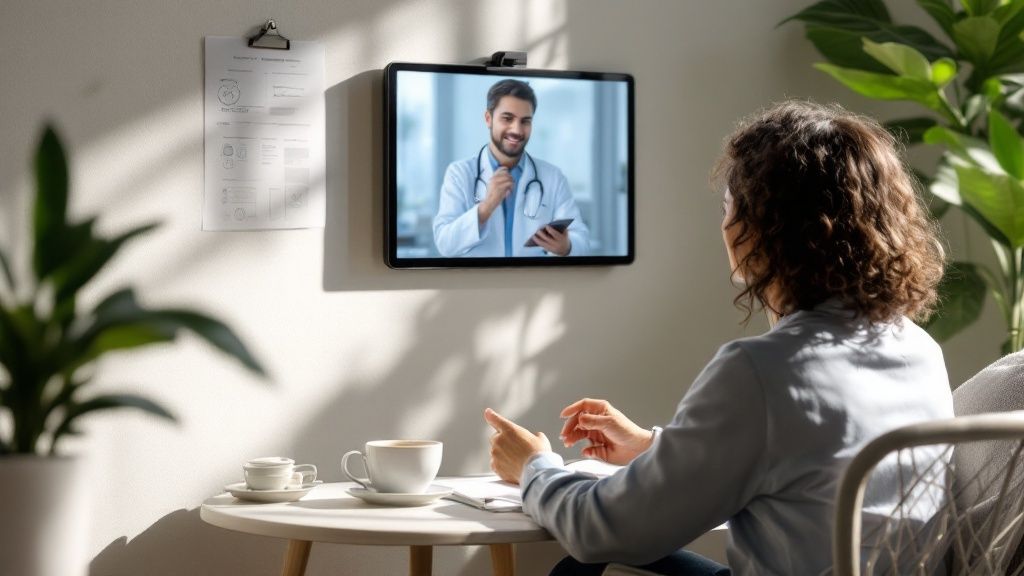
Telemedicine and virtual care have moved from a niche convenience to a core component of healthcare delivery, representing one of the most transformative healthcare and technology trends of the decade. This model uses secure digital communication to connect patients and providers remotely, dismantling geographical barriers and making healthcare more accessible. The goal is not just to replicate in-person visits but to create a more continuous, integrated care experience that fits modern lifestyles.
How It Works and Key Applications
At its core, telemedicine facilitates patient consultations through video calls, secure messaging, and remote monitoring devices. This technology is incredibly versatile, supporting everything from urgent care and routine follow-ups to specialized chronic disease management and mental health counseling.
For instance, Teladoc Health offers on-demand virtual consultations with physicians 24/7, providing immediate care for non-emergency issues. Similarly, Amwell provides a comprehensive platform that hospitals and health systems can use to offer virtual services across various specialties. These platforms don't just improve convenience; they increase patient engagement and ensure continuity of care, especially for those with mobility challenges or in rural areas.
Practical Implementation Steps
From my experience scaling technology platforms, successful virtual care integration hinges on a patient-centric, secure framework:
- Prioritize Security: Begin by selecting a HIPAA-compliant platform. Patient trust is paramount, and a data breach can be catastrophic.
- Integrate with EHRs: Ensure the telemedicine platform seamlessly integrates with your existing Electronic Health Records to maintain a unified patient view.
- Develop Clear Protocols: Establish and communicate clear guidelines for what conditions are appropriate for virtual care versus in-person visits and what to do in an emergency.
- Invest in Training: Equip both clinicians and administrative staff with comprehensive training on "webside manner" and the platform's technical aspects to ensure a smooth patient experience.
3. Internet of Things (IoT) and Wearable Health Devices
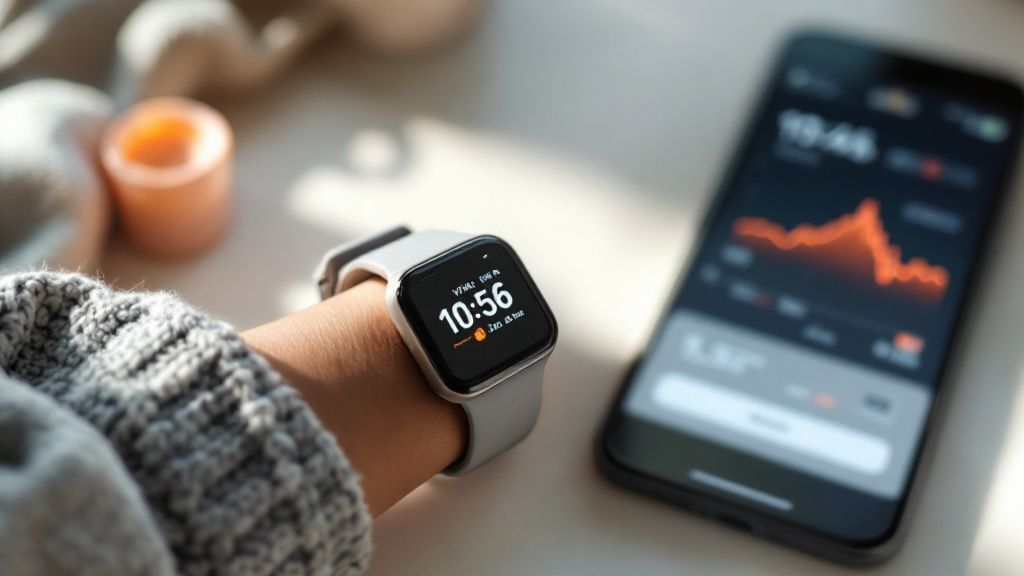
The Internet of Things (IoT) and wearable devices are shifting healthcare from reactive to proactive, representing one of the most transformative healthcare and technology trends. This network of connected devices, from smartwatches to continuous glucose monitors, collects and transmits real-time health data. This empowers both patients and clinicians with continuous physiological insights, moving patient care beyond the four walls of the clinic.
How It Works and Key Applications
IoT devices use sensors to monitor vital signs, activity levels, and specific biomarkers, then transmit that information to a centralized platform or an EHR system. This enables continuous monitoring for chronic disease management, post-operative recovery, and preventative wellness. The data stream allows for early detection of potential health issues before they become critical.
For instance, the Apple Watch can detect atrial fibrillation, a leading cause of stroke, and automatically alert the user and emergency services if a hard fall is detected. Similarly, continuous glucose monitors like those from Dexcom provide a constant stream of blood sugar data to patients and their doctors, revolutionizing diabetes management. Philips Healthcare offers sophisticated remote patient monitoring solutions that track vitals for at-risk patients at home, reducing hospital readmissions.
Practical Implementation Steps
From my experience scaling operations, successful IoT integration hinges on creating a seamless data ecosystem:
- Focus on Clinical Validation: Prioritize devices that are FDA-cleared or clinically validated to ensure data accuracy and reliability for decision-making.
- Establish Robust Data Protocols: Define clear governance for how data is collected, stored, secured, and integrated. HIPAA compliance is non-negotiable.
- Prioritize Patient Education: Equip patients with the training and resources needed to use their devices correctly and understand the data they are generating.
- Ensure EHR Integration: The real value is unlocked when wearable data flows directly into the EHR, providing clinicians with a holistic view of patient health.
4. Blockchain for Healthcare Data Security
Blockchain technology offers a groundbreaking approach to securing healthcare data by creating an immutable, decentralized ledger. This stands as one of the most critical healthcare and technology trends because it directly tackles long-standing issues of data integrity, interoperability, and patient privacy. The core idea is to give patients control over their own data while enabling secure, transparent sharing among authorized providers. This isn't about just another database; it's a fundamental shift in how we manage and trust sensitive health information.
How It Works and Key Applications
At its core, a blockchain is a distributed digital record where each "block" of transactions is linked chronologically and cryptographically to the previous one. This structure makes tampering with records nearly impossible. In healthcare, this translates to a secure, single source of truth for a patient's medical history, accessible only with their explicit consent.
For instance, the MedRec project developed by MIT uses blockchain to create a decentralized record-management system that gives patients control over their medical data. In Estonia, Guardtime's blockchain technology secures the country's national health records, ensuring data integrity for over a million citizens. These examples demonstrate blockchain’s power to create a truly patient-centric healthcare ecosystem.
Practical Implementation Steps
From my experience driving digital transformation, a successful blockchain rollout requires strategic planning:
- Start with a Focused Pilot: Begin with a specific, high-impact use case like clinical trial data management or pharmaceutical supply chain verification to prove the concept.
- Establish a Governance Framework: Clearly define rules for data access, consent management, and network participation before scaling.
- Prioritize Interoperability: Ensure your blockchain solution can integrate seamlessly with existing EHR systems and other health IT infrastructure.
- Collaborate with Experts: Partner with technology firms specializing in healthcare blockchain, such as IBM or Microsoft Azure, to navigate the technical and regulatory complexities.
5. 3D Printing and Bioprinting in Medicine
The advent of 3D printing and its advanced counterpart, bioprinting, represents a monumental leap forward in personalized medicine, positioning them as key healthcare and technology trends. These technologies move beyond mass production to enable the on-demand creation of highly customized medical devices, surgical models, and even biological tissues. The core value lies in tailoring solutions directly to a patient's unique anatomy, drastically improving fit, function, and clinical outcomes.
How It Works and Key Applications
Standard 3D printing, or additive manufacturing, builds objects layer-by-layer from a digital model. In healthcare, this is used to create everything from custom prosthetics and dental implants to precise surgical guides. Bioprinting applies the same principle but uses "bio-inks" made of living cells and biomaterials to construct functional tissue structures.
For instance, companies like 3D Systems provide surgeons with patient-specific anatomical models for pre-operative planning, reducing surgery time and risk. Meanwhile, pioneers such as CELLINK are developing bioprinting platforms that allow researchers to create human tissue models for more accurate drug testing, accelerating pharmaceutical development and reducing reliance on animal trials.
Practical Implementation Steps
From my experience scaling new technologies, a measured, application-focused rollout is essential:
- Identify High-Impact Areas: Begin with applications that offer a clear return on investment, such as creating surgical guides or dental models, before exploring more complex implants.
- Partner with Experts: Collaborate with established 3D printing firms to leverage their specialized hardware, software, and material science expertise.
- Prioritize Training: Invest in comprehensive training and certification for your clinical and technical staff to ensure they can operate the technology safely and effectively.
- Navigate Regulatory Pathways: Work closely with regulatory bodies to ensure any patient-facing devices or implants meet all compliance and safety standards.
6. Robotic Surgery and Automation
The operating room is undergoing a transformation driven by robotics and automation, marking one of the most impactful healthcare and technology trends in modern surgery. These systems are not autonomous robots; instead, they are sophisticated tools that extend a surgeon's capabilities, providing enhanced precision, dexterity, and visualization. By combining advanced robotics with high-definition 3D imaging, these platforms enable more complex procedures to be performed through minimally invasive incisions.
How It Works and Key Applications
Robotic surgery systems translate a surgeon's hand movements into smaller, more precise movements of tiny instruments inside the patient's body. This eliminates natural hand tremors and allows for unparalleled control in tight spaces. The goal is to improve surgical outcomes by reducing trauma, minimizing blood loss, and shortening patient recovery times.
A prime example is Intuitive Surgical's da Vinci system, which has become a standard for complex prostatectomies and gynecological procedures. Similarly, Stryker's Mako system is revolutionizing orthopedic surgery by allowing for highly personalized knee and hip replacements based on a patient's unique anatomy. These systems empower surgeons to perform with a level of accuracy that was previously unimaginable, leading to better, more consistent results.
Practical Implementation Steps
From my experience scaling complex technological integrations, adopting robotic surgery requires a strategic, systems-level approach:
- Invest in Comprehensive Training: Ensure surgeons and their teams undergo rigorous, standardized training and simulation before operating. Proficiency is non-negotiable.
- Develop Standardized Protocols: Create clear, repeatable workflows for pre-operative setup, intra-operative procedures, and post-operative care to maximize efficiency and safety.
- Ensure Robust Technical Support: Partner with vendors to establish a reliable maintenance and support plan. Downtime in the OR is incredibly costly and disruptive.
- Monitor Outcomes and ROI: Continuously track key metrics like surgical times, complication rates, patient recovery periods, and overall cost-effectiveness to validate the investment.
7. Digital Therapeutics (DTx)
Digital therapeutics (DTx) represent a new class of medicine, where software serves as the primary therapeutic agent. These are not wellness apps; they are evidence-based, clinically validated interventions prescribed by physicians to prevent, manage, or treat a medical condition. As one of the most exciting healthcare and technology trends, DTx offer a scalable, accessible alternative or complement to traditional pharmaceuticals.
How It Works and Key Applications
DTx deliver cognitive behavioral therapy, skill-building exercises, or patient monitoring through engaging software on a patient's personal device. The goal is to drive behavioral change and improve health outcomes through direct, on-demand therapeutic engagement. This approach is proving transformative for chronic conditions that have a significant behavioral component.
For instance, Pear Therapeutics’ reSET is an FDA-authorized prescription digital therapeutic for substance use disorder, providing interactive lessons and skill-building modules. Similarly, Akili Interactive's EndeavorRx is a video game-based treatment for children with ADHD, designed to improve attention function. These solutions offer personalized, data-driven care that adapts to the patient's progress.
Practical Implementation Steps
From my experience launching new products, I recommend a rigorous, clinically-focused strategy for DTx:
- Prioritize Clinical Validation: Start with robust clinical trials to generate the evidence needed for regulatory approval and physician buy-in.
- Develop Strong Patient Engagement: Design the user experience to be compelling and intuitive. If patients don't use the software, it cannot deliver therapeutic value.
- Build Provider Partnerships: Work closely with healthcare providers to integrate the DTx solution into their existing clinical workflows and prescribing habits.
- Engage Regulatory Bodies Early: Proactively collaborate with agencies like the FDA to navigate the specific pathways for software as a medical device (SaMD).
8. Precision Medicine and Genomics
Precision medicine, also known as personalized medicine, marks a fundamental shift away from a one-size-fits-all approach to treatment. It is one of the most transformative healthcare and technology trends, leveraging a patient's unique genetic, environmental, and lifestyle information to guide disease prevention and treatment. Genomics, the study of a person's complete set of DNA, provides the foundational data that makes this hyper-personalized care possible.
How It Works and Key Applications
At its core, precision medicine involves sequencing a patient's genome to identify specific biomarkers or genetic mutations that influence their health. This genetic blueprint allows clinicians to predict disease risk, select the most effective treatments, and avoid adverse drug reactions based on an individual's unique biological makeup.
Oncology is where this approach has made its greatest impact. Companies like Foundation Medicine and Tempus provide comprehensive genomic profiling for tumors, identifying the specific mutations driving cancer growth. This allows oncologists to prescribe targeted therapies that attack the cancer cells directly while sparing healthy tissue. Similarly, Illumina's sequencing platforms have become essential tools for research and clinical diagnostics worldwide.
Practical Implementation Steps
From my experience, implementing a precision medicine program requires a strategic, patient-centric framework:
- Start with High-Impact Areas: Focus initial efforts on fields like oncology or pharmacogenomics where the value of genetic testing is well-established.
- Invest in Genetic Counseling: These specialists are crucial for helping patients understand complex test results and their implications for care.
- Establish Clear Consent Processes: Ensure patients fully comprehend how their genetic data will be used, stored, and protected. Transparency builds trust.
- Partner with Genomics Experts: Collaborate with specialized labs and technology partners to access the necessary sequencing and analytical capabilities without massive upfront investment.
9. Augmented and Virtual Reality in Healthcare
Augmented reality (AR) and virtual reality (VR) are moving beyond entertainment to become powerful clinical tools, representing one of the most immersive healthcare and technology trends. These technologies create interactive, simulated environments that are fundamentally changing medical training, patient therapy, and surgical procedures. The core value lies in providing risk-free, repeatable training and innovative therapeutic experiences that are difficult to replicate in the real world.
How It Works and Key Applications
VR immerses users in a completely digital environment, while AR overlays digital information onto the real world. In healthcare, this means surgeons can view 3D organ models overlaid on a patient during an operation, or medical students can practice complex procedures on virtual patients without any risk. This technology is revolutionizing medical education, pain management, and surgical precision.
For instance, Surgical Theater’s platform allows neurosurgeons to "fly through" a patient's brain scan in VR before ever making an incision, dramatically improving pre-operative planning. Meanwhile, AppliedVR uses VR to manage chronic pain and anxiety by transporting patients to calming environments, reducing the need for opioid medication and demonstrating a clear therapeutic benefit.
Practical Implementation Steps
To integrate AR/VR effectively, I recommend a use-case-driven strategy focused on tangible outcomes:
- Start with Specific Use Cases: Begin with a single application that shows clear value, such as surgical training or patient rehabilitation, to build support and demonstrate ROI.
- Invest in User Training: These are new tools. Comprehensive training and ongoing support are essential for clinicians and staff to feel comfortable and proficient.
- Develop Relevant Content: Partner with technology providers to create or customize AR/VR content that directly addresses the needs of your clinical specialties.
- Consider Mobile Solutions: For broader applications like patient education or therapy, mobile-based VR can be a cost-effective way to scale deployment without expensive hardware.
- Measure Outcomes Systematically: Define success metrics from the start, whether it’s reduced training time, improved surgical accuracy, or better patient-reported pain scores.
Healthcare Technology Trends Comparison Table
| Technology | Implementation Complexity 🔄 | Resource Requirements ⚡ | Expected Outcomes 📊 | Ideal Use Cases 💡 | Key Advantages ⭐ |
|---|---|---|---|---|---|
| Artificial Intelligence and Machine Learning | High technical complexity; extensive data training required | High computing power, specialized staff, data infrastructure | Improved diagnostic accuracy; personalized treatments; cost reduction | Diagnostics, predictive analytics, real-time monitoring | Enhanced accuracy; 24/7 monitoring; automation-driven cost savings |
| Telemedicine and Virtual Care | Moderate; requires secure platforms and protocols | Digital communication tools; patient and provider devices | Increased accessibility; reduced travel; improved convenience | Remote consultations; rural and mobility-limited patients | Expanded access; convenience; infection risk reduction |
| IoT and Wearable Health Devices | Moderate to high; integration and interoperability challenges | Connected devices, sensors, real-time data infrastructure | Early detection; continuous monitoring; patient engagement | Chronic disease management; patient self-monitoring | Real-time data; improved engagement; reduced readmissions |
| Blockchain for Healthcare Data Security | High; requires specialized expertise and regulatory compliance | Distributed ledger infrastructure; energy and computing resources | Enhanced data security; patient-controlled sharing; auditability | Medical records, drug traceability, insurance claims | Data integrity; security; improved interoperability |
| 3D Printing and Bioprinting in Medicine | High; equipment, material costs, and regulatory hurdles | Advanced printers, bioinks, trained personnel | Personalized devices; reduced surgery time; organ scaffolds | Prosthetics, implants, surgical planning, tissue engineering | Customization; cost reduction; potential organ replacement |
| Robotic Surgery and Automation | Very high; steep learning curve and technical support needed | Robotic systems, high maintenance; extensive training | Increased precision; reduced trauma; remote surgery capability | Minimally invasive surgeries; complex procedures | Enhanced precision; better outcomes; remote access to expertise |
| Digital Therapeutics (DTx) | Moderate; software development and clinical validation | Software platforms, clinician integration, patient engagement | Cost-effective treatment; personalized interventions; reduced side effects | Chronic disease management; behavioral health | Evidence-based; real-time monitoring; improved accessibility |
| Precision Medicine and Genomics | High; complex data analysis and privacy considerations | Genetic sequencing platforms; counseling services | Targeted therapies; early detection; optimized dosing | Oncology, rare diseases, personalized drug therapy | Precise treatments; reduced adverse effects; improved outcomes |
| Augmented and Virtual Reality in Healthcare | Moderate to high; hardware and content development required | AR/VR devices, software development, user training | Enhanced training; improved surgical planning; innovative therapies | Medical education; surgical assistance; pain management | Immersive education; better patient understanding; risk-free training |
Your Next Move: Architecting a Tech-Driven Growth Strategy
The innovations we've explored, from AI-driven diagnostics to robotic surgery and the rise of digital therapeutics, are far more than just individual healthcare and technology trends. They represent the fundamental building blocks of a new, interconnected digital health ecosystem. Viewing them in isolation is a critical error. The true competitive advantage, the exponential growth, lies not in adopting a single technology but in orchestrating them into a cohesive, patient-centric system.
For decades, I've seen organizations across industries grapple with technological disruption. The ones that succeed are those that move beyond piecemeal adoption and architect a proactive, integrated strategy. They don't just buy a new AI tool; they fundamentally redesign their workflows around data-driven insights. They don't just offer a telemedicine option; they create a seamless virtual care journey that complements and enhances in-person services.
This shift demands more than just a capital investment. It requires a profound cultural change, a relentless focus on breaking down the functional silos between clinical, operational, and IT teams that stifle innovation. The future of healthcare will be defined by those who can successfully merge clinical excellence with technological prowess, creating a system that is predictive, personalized, and efficient.
From Insight to Implementation: Your Action Plan
So, where do you begin? The path forward requires a deliberate, data-backed approach. Don't chase every shiny new object. Instead, focus your efforts on a structured plan to drive measurable ROI and improve patient outcomes.
- Conduct a Comprehensive Tech Audit: Start by mapping your existing technology stack against the patient journey. Identify critical gaps, data silos, and areas of friction. Where are you losing efficiency? Where is the patient experience breaking down? This isn't just an IT exercise; it requires input from every department.
- Prioritize Based on Impact: You cannot implement everything at once. Use a simple framework to rank potential initiatives based on their potential clinical impact, operational efficiency gains, and revenue potential. Focus on one or two high-impact projects first to build momentum and demonstrate value.
- Launch Pilot Programs: Before committing to a full-scale rollout, launch targeted pilot programs. For example, introduce a specific IoT wearable solution for a single patient cohort or deploy a VR training module for one surgical team. This allows you to gather real-world data, measure results, and refine your approach with minimal risk.
Ultimately, mastering these healthcare and technology trends is not about technology for its own sake. It is about building a more resilient, responsive, and effective healthcare system. Your challenge as a leader is to be the architect of that future, building the bridge between today's operational realities and tomorrow's technological possibilities.
Ready to move from strategy to execution? At MGXGrowth, we specialize in helping leadership teams translate complex healthcare and technology trends into actionable growth plans and tangible revenue outcomes. Visit MGXGrowth to learn how we can help you architect your next stage of growth.
