


I’ve spent decades driving growth across diverse sectors, from SaaS to hospitality, and the data consistently points to a powerful conclusion: your physical store is not a legacy cost center; it's your most potent, untapped growth lever. Many executives view brick-and-mortar as a transactional endpoint, a holdover from a pre-digital era. This is a critical strategic error. The most resilient, high-growth brands understand that a physical footprint is where you forge lasting customer relationships and build a defensible moat against purely digital competitors.
True growth comes from transforming a transactional space into an experiential destination. This isn't about fleeting gimmicks; it's about a fundamental shift in mindset from fulfillment to relationship-building. In my work breaking down silos between marketing, sales, and operations to unlock sustainable revenue, I've seen firsthand that superior customer engagement in retail stores directly correlates with increased lifetime value, higher average order values, and accelerated brand advocacy. When executed with precision, the in-store experience becomes a powerful engine for both customer acquisition and long-term retention.
This article moves beyond abstract theory into actionable frameworks. I will dissect 10 battle-tested strategies that transform your retail locations into high-performing brand assets. We will cover specific tactics from AI-powered personalization and experiential events to staff empowerment and seamless omnichannel integration. Forget academic concepts; these are practical, data-driven approaches designed to be implemented immediately to drive both top-line revenue and bottom-line EBITDA. It’s time to stop viewing your stores as mere points of sale and start leveraging them as your most formidable competitive advantage.
1. Interactive Digital Signage and Displays
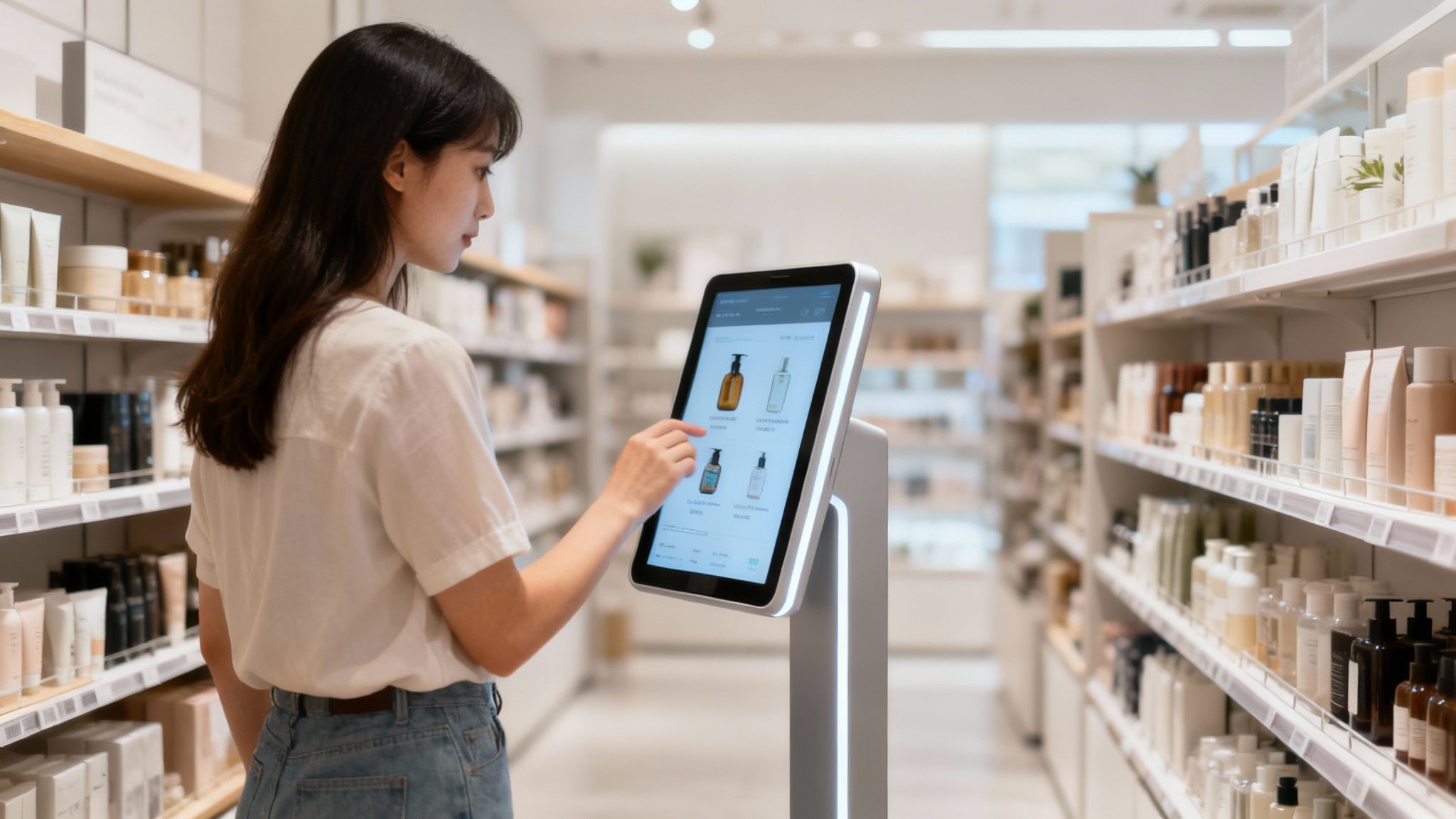
Static displays are an operational relic. To architect superior customer engagement in retail stores, you must transition from passive information delivery to active, dynamic interaction. Interactive digital signage is more than an aesthetic upgrade; these displays are powerful tools for bridging the physical and digital shopping experiences, offering customers the instant access to information and deep product knowledge they now demand.
These systems, often featuring touchscreen capabilities, empower customers to control their own discovery journey. Instead of flagging down an associate, they can instantly access detailed product specifications, watch demonstration videos, explore color variations, or check real-time inventory levels. This self-service model not only satisfies the modern consumer's demand for autonomy but also frees up your staff to focus on high-value, consultative interactions that actually drive conversion.
Why This Approach Works
Interactive displays transform the store from a simple point of sale into an immersive brand ecosystem. Consider the data from Sephora's "Beauty Advisor" screens, which allow customers to virtually try on makeup and receive personalized recommendations. This creates a memorable, engaging experience that builds purchase confidence and directly drives higher conversion rates. Similarly, IKEA's in-store room planning stations let customers visualize products in their own space, directly addressing a key purchase barrier and shortening the sales cycle. These tools turn passive browsing into active problem-solving, which translates directly to revenue.
Key Insight: The objective isn't merely to display information, but to initiate a data-rich dialogue. When a customer can interact with a product digitally in-store, they build a deeper connection and are significantly more likely to convert.
Actionable Implementation Strategy
To deploy this technology for maximum ROI, focus on seamless integration and user-centric design.
- Strategic Placement: Position displays in high-traffic areas and at critical decision-making points, such as near complex product categories or at aisle endcaps. Ensure they are at a comfortable eye level and ADA-compliant.
- Intuitive Interface: The user interface (UI) must be ruthlessly simple and highly responsive. A complicated or slow system will create friction and drive abandonment.
- Dynamic Content Engine: Regularly update promotions, product information, and interactive features through a centralized content management system. Stale content makes the technology feel like a wasted capital expenditure.
- Staff Enablement: Train your team not just on the technical usage of the displays, but on how to leverage them as sales-assist tools to enhance their customer conversations.
- Data Analysis: Instrument the displays to capture analytics on customer behavior. Track which products are most viewed and what features are most used to optimize both the digital content and your physical store layout.
2. Personalized Customer Loyalty Programs
Generic, one-size-fits-all rewards are a lazy tactic that no longer fosters genuine brand affinity. To truly drive customer engagement in retail stores, you must evolve beyond simple punch cards to data-driven, personalized loyalty programs. These sophisticated systems do more than reward transactions; they recognize and celebrate individual customer behavior, forging a powerful emotional connection that drives repeat business and transforms shoppers into high-value advocates.
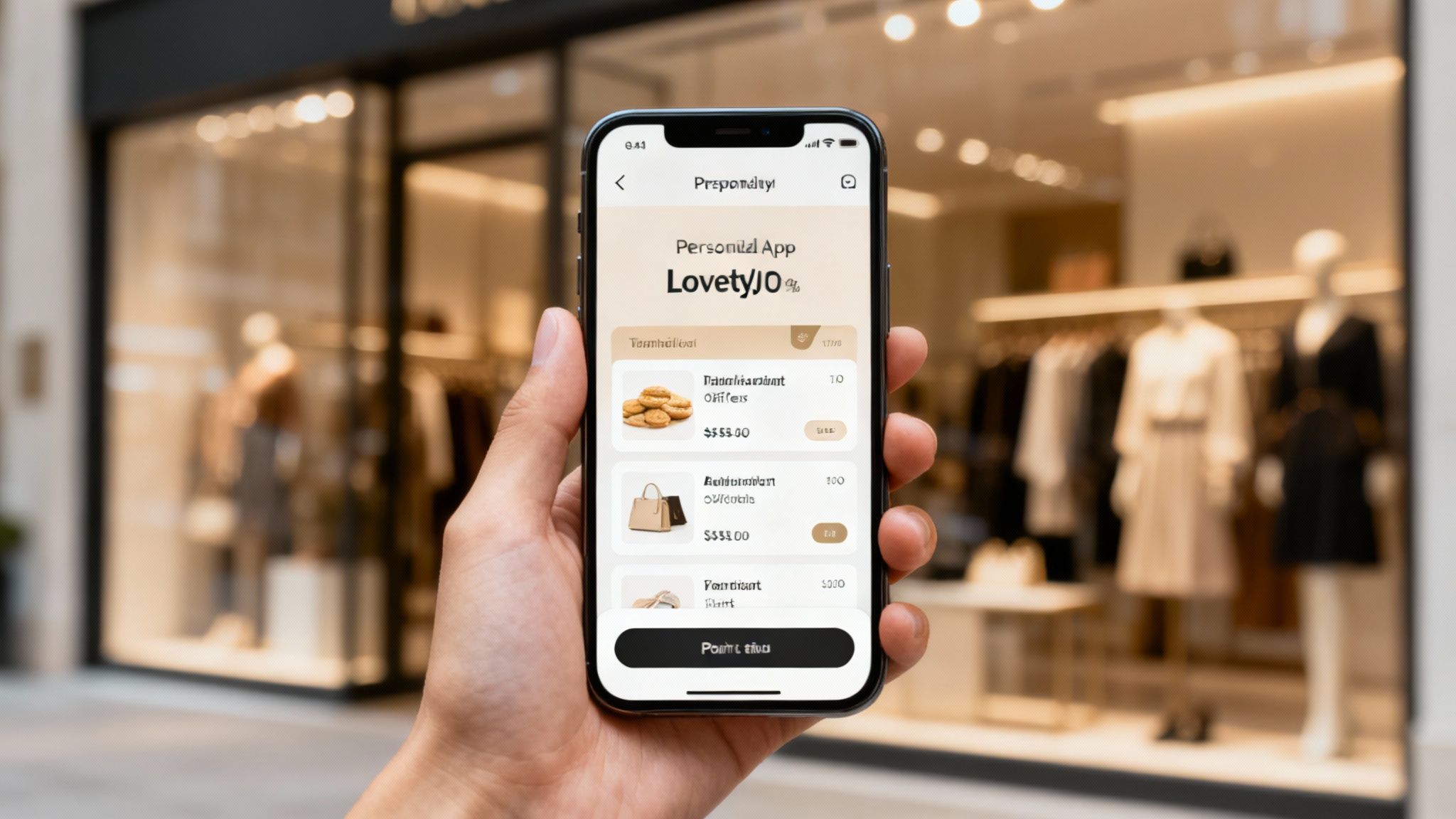
By leveraging purchase history, preferences, and engagement patterns, you can deliver tailored incentives that feel exclusive and relevant. Instead of a generic discount, a customer receives a targeted offer for a product they’ve previously browsed or a special reward on their birthday. This level of personalization communicates to customers that you understand them, making them feel valued beyond their last transaction.
Why This Approach Works
Personalized loyalty programs turn the act of shopping into a rewarding, gamified experience that increases visit frequency. Take the Starbucks Rewards program, which uses its mobile app to offer personalized challenges and bonus stars based on individual buying habits. This not only encourages more frequent visits but also deepens engagement with the brand's entire digital ecosystem. Similarly, Sephora's VIB program creates a tiered system with increasingly valuable perks, fostering a sense of aspiration and exclusivity that drives retention. The program effectively uses data to make every interaction feel uniquely tailored and valuable.
Key Insight: Loyalty is not built on transactions; it's built on a value-exchange relationship. Personalization makes the customer feel seen and understood, turning a simple rewards program into a cornerstone of the brand experience and a driver of LTV.
Actionable Implementation Strategy
Deploying a successful personalized loyalty program requires a focus on data integration and a frictionless customer experience.
- Frictionless Enrollment: Make signing up effortless. Integrate enrollment into the checkout process, both in-store and online, requiring minimal information to get started.
- Tiered & Meaningful Rewards: Design a tiered system where rewards become more valuable as customers increase their spending and engagement. Ensure the rewards align with what your customers actually value, such as exclusive access, early product drops, or special discounts.
- Leverage Purchase Data: Use purchase history to send targeted offers. If a customer frequently buys a specific brand, send them an exclusive discount for that brand's new product line. A well-executed customer segmentation strategy is the non-negotiable foundation for this level of personalization.
- Omnichannel Integration: Ensure your loyalty program functions seamlessly across all channels—in-store, online, and via mobile app. Points and rewards must be accessible and redeemable anywhere, at any time.
- Clear Communication: Clearly communicate program benefits at all touchpoints. Train staff to actively promote the program and articulate its value proposition during checkout to boost enrollment and engagement.
3. In-Store Events and Experiential Activations
The modern retail space must transcend its transactional origins to survive. To achieve defensible customer engagement in retail stores, you need to transform your location from a place where people buy things into a destination where they experience the brand. In-store events and experiential activations are the most direct way to achieve this, turning your store into a dynamic community hub that fosters loyalty far beyond a single purchase.
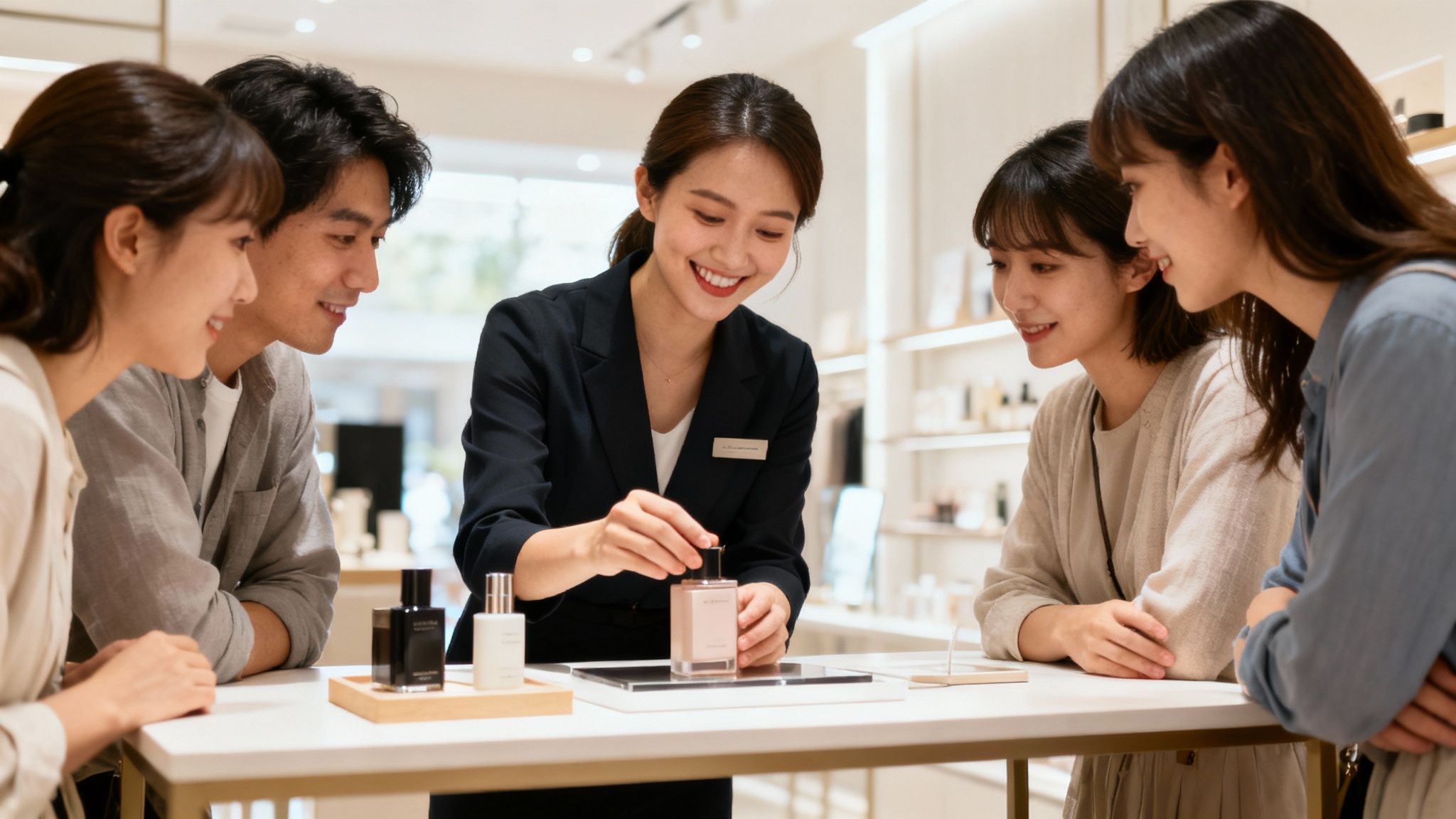
These activations shift the focus from passive shopping to active participation. By hosting workshops, product demonstrations, or exclusive community gatherings, you provide tangible value and create powerful, emotional connections. Customers are no longer just consumers; they become part of a tribe, sharing a memorable experience that is intrinsically linked to your brand. This strategy builds an economic moat around your business that online-only competitors simply cannot replicate.
Why This Approach Works
Experiential retail is a direct driver of both foot traffic and brand affinity. Consider Lululemon, which effectively turned its stores into yoga studios and fitness hubs, cementing its identity as an authentic wellness brand and community pillar. Similarly, REI’s in-store climbing walls and outdoor skills workshops allow customers to use products in a simulated environment, directly answering the question, "Is this right for me?" These events generate organic social media buzz and provide a powerful reason for customers to visit, even when they aren't planning an immediate purchase.
Key Insight: Don't just sell a product; sell the experience the product enables. When customers associate your store with positive memories and personal growth, they develop a deep-seated loyalty that price discounts can never purchase.
Actionable Implementation Strategy
Deploying a successful event strategy requires disciplined planning and a focus on authentic brand alignment.
- Align with Brand Identity: Ensure every event reinforces your core brand promise. A luxury brand might host a private trunk show, while a tech store could offer coding workshops for kids. Misalignment feels inauthentic and erodes trust.
- Promote Extensively: Use a multi-channel approach to promotion, including your CRM email lists, social media, in-store signage, and partnerships with local influencers or community groups to maximize attendance.
- Design for Social Amplification: Create visually appealing setups and "Instagrammable moments" that encourage attendees to share their experiences online, amplifying your reach organically at a low CAC.
- Capture Data for Follow-Up: Use event registration to collect contact information. Follow up with attendees to thank them, share photos, and offer a targeted, exclusive discount on their next purchase to drive repeat visits.
- Measure Success Holistically: Track metrics beyond immediate sales, such as foot traffic, social media mentions, and email sign-ups, to understand the full ROI of your experiential marketing investments.
4. Mobile Point-of-Sale (mPOS) and Frictionless Checkout
The final, and often most frustrating, step of the retail journey is the checkout line. Long queues are a major source of friction and a primary driver of cart abandonment. To truly optimize customer engagement in retail stores, you must dismantle this final barrier. Mobile Point-of-Sale (mPOS) systems untether your team from fixed cash registers, empowering them to complete transactions anywhere on the sales floor.
This technology transforms the checkout process from a static bottleneck into a dynamic, fluid part of the shopping experience. By equipping associates with tablets or handheld devices, you can meet customers at their point of decision—whether they are trying on shoes or exploring a home goods display. This immediacy not only delights the customer by saving them time but also captures sales at the peak of their purchase intent before they have a chance to reconsider.
Why This Approach Works
Frictionless checkout fundamentally changes the role of the sales associate from a simple cashier to a holistic service provider. Apple pioneered this model, where employees manage the entire customer interaction, from product demonstration to final payment, using a single mobile device. This creates a seamless, consultative experience. Similarly, Nordstrom empowers its associates to check out customers directly in the fitting rooms, eliminating the need to wait in line and reinforcing a premium, personalized service standard. The result is higher customer satisfaction and a more efficient sales process.
Key Insight: The last impression is the lasting one. By removing the friction of a traditional checkout, you end the customer's visit on a high note of convenience and efficiency, boosting their overall perception of your brand.
Actionable Implementation Strategy
Deploying mPOS requires a blend of technological readiness and operational discipline.
- Ensure Network Reliability: A robust and secure Wi-Fi network is the non-negotiable backbone of any mPOS system. Conduct a thorough site survey to eliminate dead zones and ensure consistent connectivity, especially during peak hours.
- Integrate Systems: Your mPOS solution must integrate seamlessly with your existing inventory management, CRM, and loyalty program software to maintain data accuracy and a single, unified view of the customer.
- Train for Versatility: Staff training must go beyond transaction processing. Teach associates how to use the devices to look up inventory, access product details, and offer personalized recommendations, turning them into mobile concierges.
- Offer Flexible Options: While mPOS is powerful, maintain at least one traditional checkout station for customers who prefer it or need to make complex returns or exchanges.
- Communicate the Benefit: Actively inform shoppers that they can check out with any available associate. Use signage and staff communication to highlight this convenient service and manage customer expectations.
5. Store Layout and Visual Merchandising Optimization
Your store’s physical layout is a silent, yet powerful, salesperson. A thoughtfully designed environment does more than just hold inventory; it directs the customer journey, communicates your brand story, and strategically influences purchasing decisions. Optimizing your store layout and visual merchandising is a critical strategy for boosting customer engagement in retail stores by transforming a simple shopping trip into a deliberate, enjoyable experience.
This approach involves the strategic arrangement of products, displays, and traffic flow to guide customers, encourage exploration, and enhance product visibility. It leverages psychology, design principles, and behavioral data to create an atmosphere that feels intuitive and exciting. A well-merchandised store reduces friction, makes discovery easy, and subtly encourages customers to spend more time—and more money—interacting with your products and brand.
Why This Approach Works
Strategic layout and merchandising shift customers from a transactional mindset to an exploratory one. Think of IKEA's legendary showroom path; it’s a masterclass in controlled discovery. By guiding customers through fully realized room settings, IKEA doesn't just sell furniture; it sells a lifestyle, making it easier for customers to visualize products in their own homes and increasing basket size. Similarly, Apple’s minimalist, open-plan stores encourage hands-on product interaction, empowering customers to learn and play without sales pressure. The layout itself becomes a core part of the engagement strategy.
Key Insight: Your store's layout should be a narrative that guides customers toward conversion. Every turn, display, and sightline must be an intentional part of the story you want to tell, leading to deeper engagement and increased sales.
Actionable Implementation Strategy
Optimizing your physical space requires a blend of creative design and rigorous data-driven analysis.
- Map the Customer Journey: Use tools like heat mapping and video analytics to understand how customers naturally move through your store. Identify high-value "hot spots" and underperforming "dead zones" to inform where you place high-margin products and key displays.
- Create Powerful Focal Points: Design compelling visual displays, or "vignettes," to draw customers deeper into the store. Use lighting, color, and unique props to highlight new arrivals or signature product collections.
- Leverage "Speed Bumps": Strategically place engaging displays or interactive elements along main pathways to slow customers down and encourage them to browse adjacent product areas they might otherwise miss.
- Refresh Regularly: Keep the environment dynamic by refreshing visual merchandising at least monthly or seasonally. This gives repeat customers a reason to revisit and discover something new, increasing visit frequency.
- Strategic Product Placement: Position high-demand items at the back of the store to encourage full-store exploration, and place high-margin impulse buys and complementary products near the checkout counters.
6. AI-Powered Personalization and Recommendation Engines
Generic, one-size-fits-all marketing is dead. To achieve breakthrough customer engagement in retail stores, you must deliver hyper-relevant experiences at an individual level. This is where AI-powered personalization and recommendation engines become indispensable, acting as a digital concierge for every shopper who walks through your door.
These sophisticated systems analyze vast datasets—including purchase history, browsing behavior, and even in-store movement patterns—to deliver tailored product suggestions in real time. This technology can manifest through smart displays that change content as a customer approaches, personalized offers sent to a shopper's mobile app, or data-driven insights that empower staff to make smarter, more accurate recommendations. The objective is to make each customer feel uniquely seen and understood.
Why This Approach Works
AI-driven personalization moves beyond simple product suggestions to create a truly curated shopping journey. Stitch Fix, a pioneer in this space, uses AI algorithms to analyze customer style preferences and feedback, enabling its human stylists to assemble highly personalized apparel boxes. This blend of data science and human expertise creates a powerful, loyalty-building experience that traditional retail struggles to match. Similarly, Sephora's AI tools analyze facial features to recommend the perfect shade of foundation, removing guesswork and building purchase confidence.
Key Insight: True personalization isn't just showing customers what they've bought before. It's about predicting what they'll value next, creating moments of discovery that feel both surprising and perfectly intuitive.
Actionable Implementation Strategy
Integrating AI effectively requires a focus on data quality, ethical transparency, and a seamless user experience.
- Start with Quality Data: Ensure your customer data is clean, centralized, and accessible. The performance of any AI model is directly tied to the quality of the data it's trained on. Garbage in, garbage out.
- Balance Automation and Human Touch: Use AI to empower your staff, not replace them. Provide associates with tablets that display AI-generated insights—"Customers who bought X also loved Y"—to help them guide customers more effectively.
- Prioritize Privacy and Transparency: Be upfront with customers about how you use their data to personalize their experience. Build trust by giving them control over their information and demonstrating clear value in return for their data.
- Test and Refine Continuously: A/B test different recommendation algorithms and user interfaces to see what resonates most with your audience. AI is not a "set it and forget it" solution; it requires ongoing optimization and investment. To explore this topic further, discover more about the range of AI tools for business on mgxgrowth.com.
7. Staff Training and Empowered Customer Service
Technology and store design are critical force multipliers, but the most powerful engine for customer engagement in retail stores remains your human capital. Your frontline employees are not just transactional clerks; they are the living, breathing embodiment of your brand. Comprehensive training that goes beyond the cash register—empowering staff to act as autonomous problem-solvers—is the bedrock of a memorable in-store experience.
Empowered employees are given the authority and tools to make decisions on the spot, turning potential customer frustrations into moments of brand-building delight. Instead of escalating a simple issue to a manager, a well-trained associate can resolve it independently, building trust and demonstrating that your brand genuinely values the customer's time and satisfaction. This transforms the employee role from a passive job into an active brand ambassadorship.
Why This Approach Works
An empowered team creates a culture of ownership that directly translates into superior customer care and higher LTV. Consider Nordstrom, legendary for its customer service culture, where employees are guided by a single rule: "Use good judgment in all situations." This simple directive empowers them to go above and beyond, creating loyalty-building stories that become powerful marketing assets. Similarly, Apple's Genius Bar training focuses intensely on empathy and problem-solving, equipping staff to handle technical issues and customer emotions with equal skill. This investment in people builds loyalty that technology alone can never replicate.
Key Insight: Don't just train your staff on what to do; train them on how to think. Empowered employees who understand the brand's core values can handle any situation with confidence and grace, creating consistently positive interactions that drive long-term value.
Actionable Implementation Strategy
To build a team of empowered brand ambassadors, focus on continuous development and clear operational guardrails.
- Invest in Ongoing Training: Move beyond a one-time onboarding session. Implement regular training modules on new products, advanced customer service scenarios, and consultative selling skills.
- Establish Clear Empowerment Guidelines: Define the scope of employee authority. For example, allow associates to approve returns or offer discounts up to a certain value without managerial approval. Clarity removes hesitation.
- Share Customer Success Stories: Create an internal feedback loop where exceptional customer service moments are celebrated and analyzed. This reinforces desired behaviors and motivates the entire team.
- Foster a Collaborative Environment: Encourage open communication where staff can share challenges and best practices. A supportive team culture ensures employees feel confident in making autonomous decisions.
- Measure and Reward Performance: Link customer satisfaction scores (CSAT/NPS) directly to employee performance reviews and incentive programs. This aligns individual goals with the company's customer engagement objectives.
8. Omnichannel Integration (Buy Online, Pick Up In-Store)
In today's retail landscape, the lines between digital and physical shopping have been irrevocably blurred. True customer engagement in retail stores now hinges on providing a seamless, channel-agnostic experience. Omnichannel integration, particularly through services like Buy Online, Pick Up In-Store (BOPIS), is no longer an optional perk; it is a fundamental customer expectation that empowers them to shop on their own terms.
This strategy unifies your online and offline operations, allowing customers to browse and purchase wherever they are most comfortable, then collect their items at their convenience. This hybrid model respects the customer's time and preferences, turning your physical store into a convenient fulfillment hub rather than just a point of sale. It effectively transforms a potential online-only transaction into a valuable in-store visit, opening new avenues for interaction and incremental sales.
Why This Approach Works
Omnichannel integration directly addresses the modern consumer's non-negotiable need for speed, convenience, and control. Retail giants like Target have perfected this with their Drive Up service, which turns a potentially tedious shopping trip into a quick, frictionless errand. This not only boosts customer satisfaction but also drives foot traffic and incremental in-store sales. Similarly, Best Buy’s model allows customers to secure high-demand electronics online and pick them up the same day, preventing lost sales to competitors and enhancing loyalty. The core principle is removing friction from the entire customer journey.
Key Insight: Omnichannel isn't about giving customers more channels; it's about making all channels feel like one unified experience. The store must become an extension of the website, and the website an extension of the store.
Actionable Implementation Strategy
To execute a successful omnichannel strategy, focus on operational excellence and proactive communication.
- Create a Frictionless Pickup Process: Designate a clear, well-signed pickup area near the entrance. Use technology like mobile check-ins and order-ready notifications to minimize wait times to near zero.
- Ensure Inventory Accuracy: Invest in a robust, real-time inventory management system that syncs across all channels. Nothing damages trust faster than an online order that is out of stock upon arrival.
- Train Staff for Upselling: Equip your team to view every pickup as a sales opportunity. Train them to mention complementary products or current promotions when handing over an order.
- Provide Proactive Communication: Keep customers informed at every step, from order confirmation to "ready for pickup" alerts. This transparency builds confidence and manages expectations effectively.
- Analyze the Complete Journey: Understanding how customers move between online and offline touchpoints is crucial for optimization. Learn more about customer journey mapping software to gain these critical insights and identify friction points.
9. Augmented Reality (AR) and Virtual Try-On Technologies
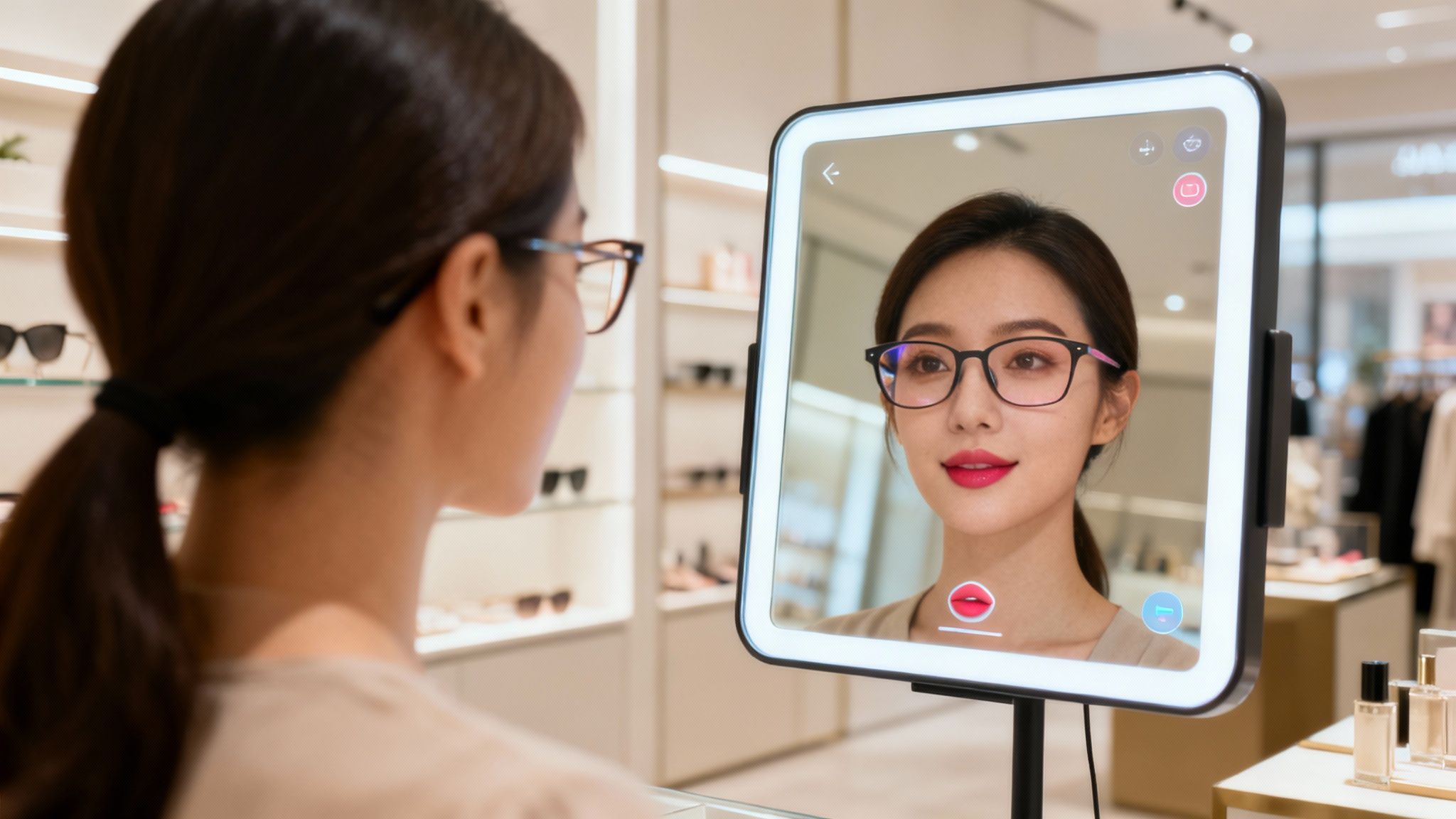
Augmented reality and virtual try-on technologies are no longer futuristic concepts; they are essential tools for driving modern customer engagement in retail stores. This technology superimposes digital information—such as a product—onto the user's real-world view, allowing them to visualize items in their own space or on their own body. It effectively eliminates one of the biggest friction points in the customer journey: the uncertainty of "How will this look on me?" or "How will this fit in my home?"
By integrating AR through in-store mirrors, kiosks, or customers' own mobile devices, retailers can offer a "try before you buy" experience without the physical constraints of inventory or fitting rooms. This immersive approach empowers customers to experiment with more products—from makeup shades to furniture styles—in a fraction of the time. This not only captivates shoppers but also provides a practical, memorable service that significantly boosts purchase confidence and reduces return rates.
Why This Approach Works
AR transforms the shopping experience from transactional to experiential, blending the convenience of online browsing with the tangibility of brick-and-mortar. Consider the IKEA Place app, which allows users to virtually place true-to-scale 3D furniture models in their own rooms, solving the spatial fit dilemma instantly. Similarly, Sephora’s Virtual Artist and Warby Parker's virtual try-on for glasses remove the hesitation and hygiene concerns of using physical testers, encouraging broad experimentation and leading to higher satisfaction and lower return rates. This technology bridges the imagination gap, turning "what if" into a tangible, visual confirmation.
Key Insight: The power of AR in retail is its ability to reduce purchase anxiety. When a customer can visualize a product in their personal context, the perceived risk of a bad purchase diminishes, and the path to conversion becomes significantly clearer.
Actionable Implementation Strategy
To successfully integrate AR, prioritize accessibility and a seamless user experience that feels like a natural extension of the shopping journey.
- Prominent Promotion: Don't hide your AR features. Use clear in-store signage, QR codes, and staff prompts to guide customers to the virtual try-on experience. Drive adoption.
- Intuitive and Fast Interface: The AR application must be incredibly easy to access and operate. A slow-loading or complex interface will lead to immediate abandonment and negative brand perception.
- Encourage Social Sharing: Build in features that allow customers to easily share their AR experiences on social media. This turns your shoppers into brand ambassadors and generates valuable user-generated content.
- Cross-Device Functionality: Ensure your technology performs flawlessly across a wide range of smartphones and devices, as customers will primarily use their own.
- Regular Product Updates: Keep the virtual inventory synchronized with your physical stock in real time. Regularly add new arrivals to the AR system to keep the experience fresh and relevant.
10. Community-Building and Social Responsibility Initiatives
Modern consumers, particularly Millennials and Gen Z, increasingly make purchase decisions based on brand values and societal impact. To forge the deepest level of customer engagement in retail stores, you must transcend the transactional relationship and build a community around shared principles. This involves positioning your store not just as a place to buy goods, but as a hub for positive change and local connection.
These initiatives connect your brand to causes that resonate with your target audience, from environmental sustainability to local community support. By championing social responsibility, you create a powerful emotional bond with customers who see their spending as a vote for the world they want to live in. This approach transforms customers from mere buyers into loyal advocates and active participants in your brand's mission.
Why This Approach Works
Purpose-driven retail fosters a sense of belonging and shared identity that price and product alone cannot match. Consider Patagonia's unwavering commitment to environmental activism; their stores serve as centers for education and grassroots organizing, attracting customers who share these core values. Similarly, REI's local outdoor education classes and trail clean-up events build a loyal community of enthusiasts who see the brand as a genuine partner in their lifestyle, not just a supplier. This strategy creates a powerful competitive moat built on trust and authenticity.
Key Insight: When customers feel they are part of a movement, not just a transaction, their loyalty shifts from conditional to unconditional. They are not just buying a product; they are investing in a shared mission.
Actionable Implementation Strategy
To authentically embed social responsibility into your retail experience, focus on genuine impact and clear communication.
- Align with Brand Values: Choose causes that are a natural extension of your brand's mission and resonate with your core customer base. Authenticity is non-negotiable; inauthenticity will be punished by the market.
- Empower Local Teams: Give store managers the autonomy and budget to partner with local non-profits or host community-specific events. This ensures relevance and grassroots engagement.
- Communicate Transparently: Clearly showcase your initiatives in-store, on your website, and through social media. Use signage to detail how each purchase contributes to a specific cause.
- Engage Employees: Involve your staff directly through volunteer programs and empower them to be passionate advocates for your brand's mission during customer interactions.
- Measure and Share Impact: Track key metrics, such as funds raised or volunteer hours contributed, and share these successes with your community. Tangible results build trust and reinforce the value of their participation.
Top 10 Retail Customer Engagement Comparison
| Item | 🔄 Implementation Complexity | ⚡ Resource Requirements | 📊 Expected Outcomes | ⭐ Key Advantages | 💡 Ideal Use Cases |
|---|---|---|---|---|---|
| Interactive Digital Signage and Displays | High — hardware, integration, ongoing content ops | High — upfront hardware, software licenses, content production | Increased dwell time, improved product discovery, self-service adoption | Engaging, data-capturing, personalized in-store experiences | Flagship stores, high-footfall areas, complex product categories |
| Personalized Customer Loyalty Programs | Moderate — CRM/segmentation and campaign setup | Moderate–High — platform, rewards budget, analytics | Higher customer lifetime value, repeat purchases, better segmentation | Drives retention and targeted marketing with rich customer data | Repeat-purchase businesses; brands seeking retention growth |
| In-Store Events and Experiential Activations | High — event planning, permits, coordination | Moderate — staffing, marketing, event materials | Short-term traffic spikes, social buzz, stronger brand affinity | Creates emotional engagement and word-of-mouth promotion | Product launches, community engagement, slow-period traffic boosts |
| Mobile Point-of-Sale (mPOS) and Frictionless Checkout | Moderate — device rollout, POS integration, security | Moderate — devices, reliable network, staff training | Reduced wait times, increased impulse purchases, higher throughput | Faster checkout and flexible sales floor transactions | Busy stores, pop-ups, omnichannel fulfillment points |
| Store Layout and Visual Merchandising Optimization | Moderate — design expertise and iterative testing | Moderate — fixtures, signage, periodic refreshes | Higher average transaction value, improved navigation and exposure | Low-tech, durable uplift to conversion through design cues | Brick-and-mortar retailers focused on conversion and discovery |
| AI-Powered Personalization and Recommendation Engines | High — data pipelines, ML models, integrations | High — data infrastructure, engineering, privacy compliance | Increased AOV, faster discovery, optimized cross-sell/upsell | Highly relevant, scalable personalization and predictive insights | Data-rich retailers aiming for automated personalization at scale |
| Staff Training and Empowered Customer Service | Moderate — program development and ongoing coaching | Moderate — training resources, incentives, time investment | Higher satisfaction scores, faster issue resolution, loyalty | Human-driven trust and authentic brand advocacy | Premium-service brands, complex-product retailers requiring expert staff |
| Omnichannel Integration (BOPIS) | High — inventory synchronization, fulfillment orchestration | High — systems integration, logistics, process changes | Increased conversions, store visit uplift, improved fulfillment efficiency | Seamless channel flexibility and improved customer convenience | Large retailers, grocery/electronics, businesses with physical+online mix |
| Augmented Reality (AR) and Virtual Try-On Technologies | High — AR development, 3D assets, cross-device testing | High — development, content creation, maintenance | Reduced returns, higher purchase confidence, social sharing | Immersive, differentiating shopping experiences | Fashion, beauty, furniture — visual decision categories |
| Community-Building and Social Responsibility Initiatives | Moderate — partner management and program continuity | Moderate — ongoing funding, staff time, PR/communication | Stronger emotional loyalty, PR benefits, employee engagement | Builds authentic differentiation and attracts conscious consumers | Brands aligned with local causes, sustainability-focused businesses |
From Strategy to Execution: Architecting Your Growth Roadmap
We have dissected ten powerful strategies designed to transform your physical locations from mere points of sale into dynamic hubs of brand interaction. From the immersive potential of AR try-on technology to the community-building power of social responsibility initiatives, each tactic offers a unique avenue to deepen customer relationships. The common thread weaving through these strategies, whether it’s interactive digital signage or AI-powered personalization, is a fundamental shift from a transactional mindset to an experiential one.
The most critical takeaway is not the individual brilliance of any single idea, but the compounding value of their integration. A well-trained, empowered staff becomes exponentially more effective when supported by a mobile POS system. A personalized loyalty program gains immense traction when promoted through in-store events. True mastery in creating high-performing customer engagement retail stores lies in architecting a cohesive ecosystem where technology, people, and processes work in symphony. This is where many initiatives fail; a brilliant technology investment falls flat without the operational and cultural alignment to support it.
Your Roadmap to Implementation
The journey from concept to reality can seem daunting, but it begins with a focused, data-driven approach. Do not attempt to boil the ocean. Instead, build a strategic roadmap grounded in your specific business context and customer needs.
- Audit and Prioritize: Begin with a ruthless audit of your current customer experience. Where are the points of friction? Where are the moments of delight? Use customer feedback, sales data, and in-store observations to identify the most significant gaps and opportunities. Prioritize the strategies discussed in this article based on potential impact versus implementation complexity for your unique operation.
- Launch a Pilot Program: Select one or two high-priority initiatives to pilot in a controlled environment. For example, implement a new staff training module focused on consultative selling in your flagship store, or test an AR try-on station for a key product category. This allows you to measure ROI, gather real-world feedback, and refine your approach before a full-scale rollout.
- Measure, Iterate, and Scale: Define clear key performance indicators (KPIs) from the outset. Track metrics like foot traffic, dwell time, conversion rates, basket size, and customer satisfaction scores. Use this data not to simply judge success or failure, but to learn and iterate. A data-obsessed culture is non-negotiable for sustainable growth.
The Imperative for Growth
In my decades of experience driving growth across various industries, one truth remains constant: the companies that win are those that relentlessly obsess over the customer. They break down the traditional silos between marketing, sales, and operations to deliver a seamless, personalized journey. Your physical retail stores are no longer just a channel; they are your most potent and tangible brand asset.
Failing to evolve this asset is a direct path to irrelevance. The future of retail will be defined not by the companies that sell the most products, but by those that build the most meaningful connections. The strategies outlined here are not just "nice-to-haves" for enhancing your brand image. They are foundational pillars for building a resilient, profitable business with a defensible market position. The work you do today to architect superior customer engagement retail stores is a direct investment in your future market share and long-term enterprise value. Begin now.
Ready to move from strategy to execution? At MGXGrowth, my team and I specialize in breaking down silos and implementing the data-driven systems needed to unlock exponential growth in your retail operations. Visit MGXGrowth to learn how we partner with leadership teams to turn customer engagement concepts into measurable revenue and market share gains.
