


In the hospitality world, a first-time diner is an opportunity, but a returning customer is an asset. Acquiring a new guest can cost five to twenty-five times more than retaining an existing one. That's not just a statistic; it's the foundational principle of sustainable growth.
For decades, I've architected growth frameworks for businesses across industries, from SaaS to real estate, by optimizing the customer lifecycle. In the restaurant space, this focus is even more critical. Food trends come and go, but the emotional connection and frictionless experience you build are what create true loyalty. This isn't generic advice; it's a breakdown of eight data-backed, actionable restaurant customer retention strategies.
We'll move beyond the obvious to explore the specific systems and cultural shifts that transform one-time visitors into your most profitable, vocal advocates. These tactics are designed to break down the silos between your kitchen, front-of-house, and marketing teams, directly impacting your top and bottom lines. Let's engineer your retention roadmap.
1. Loyalty and Rewards Programs
One of the most powerful and direct restaurant customer retention strategies I've implemented is a well-structured loyalty program. At its core, this isn't just about discounts; it's a system for recognizing and rewarding your most valuable guests, creating a tangible incentive for them to choose your establishment over a competitor. By tracking purchases and offering points or exclusive perks, you build a reciprocal relationship that transforms transactional customers into loyal advocates.
Modern programs, like the wildly successful Starbucks Rewards, leverage mobile-first technology to integrate seamlessly into the customer's daily routine. They make earning and redeeming rewards frictionless, which is a non-negotiable for adoption and sustained engagement.
How to Implement This Strategy Effectively
A successful loyalty program is simple for the customer and insightful for the business. The goal is to make guests feel valued while you gather the data required to enhance their experience further.
- Keep it Simple: The earning and redemption process must be transparent. A confusing system creates friction and kills participation. For example, a clear model like "10 points for every dollar spent, 1,000 points for a free entrée" is easy to understand and track.
- Personalize the Rewards: Use the purchase data you collect to deliver personalized rewards. If a customer frequently orders a specific dish, surprise them with a special offer on it. This proves you're paying attention and deepens their connection to your brand.
- Drive Enrollment: Offer a compelling sign-up bonus, such as a free appetizer or a significant discount on their next visit. Train your staff to articulate the benefits at the point of sale to maximize new member acquisition.
The following chart visualizes key performance metrics from successful loyalty programs, showing their direct impact on business growth.
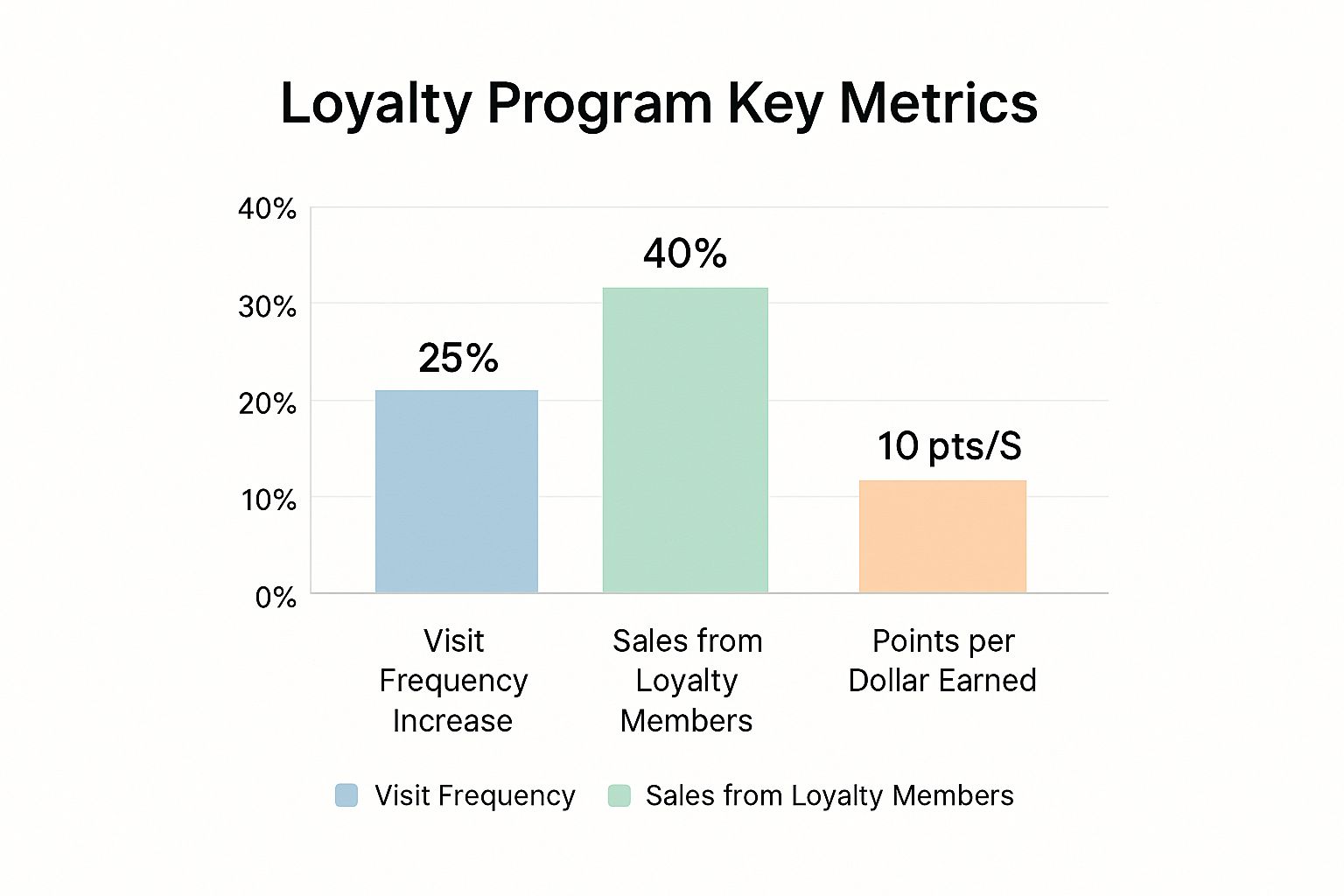
As the data illustrates, these programs are not cost centers; they are significant revenue drivers, with members often accounting for a substantial portion of total sales.
A well-executed program provides a direct, measurable path to building a loyal customer base, which is fundamental to long-term success. By turning repeat business into a strategic objective, you can significantly increase your restaurant's revenue and market resilience.
2. Personalized Email Marketing Campaigns
In my experience, one of the most cost-effective and direct restaurant customer retention strategies is moving from generic email blasts to highly personalized campaigns. This isn't about sending a monthly newsletter; it's about weaponizing customer data to deliver the right message at the right time. By segmenting your audience based on their dining history, preferences, and visit frequency, you create communication that feels exclusive and relevant, directly triggering their next visit.
This strategic approach transforms the inbox from a marketing channel into a personal line of communication. For instance, Shake Shack’s location-specific campaigns about new menu items drive impressive engagement because they are immediately relevant to the recipient. This level of personalization makes customers feel seen and valued, not just marketed to.
How to Implement This Strategy Effectively
A successful email campaign deepens the customer relationship while driving measurable action. The key is to leverage data from your POS, reservation system, or loyalty program to ensure every email counts.
- Segment Your Audience: Don't send the same email to everyone. Create segments for new customers, regulars, and lapsed guests. A new subscriber must get a welcome series, while a regular might receive an exclusive preview of a new dish. A lapsed customer needs a compelling "we miss you" offer to reactivate them.
- Automate Key Touchpoints: Set up automated emails for crucial moments in the customer journey. A personalized birthday email with a free dessert offer, like those from The Cheesecake Factory, is a classic, high-impact example. Post-visit "thank you" emails asking for feedback also show you value their opinion.
- Focus on Value, Not Just Sales: While the goal is to drive visits, your content must offer genuine value. Share a chef’s recipe, announce a special community event, or give early access to reservations. This builds brand affinity and keeps your audience engaged between visits.
By treating email as a tool for relationship-building, you can create a powerful and consistent revenue stream. This approach ensures your restaurant stays top-of-mind, turning one-time diners into a community of regulars who feel a genuine connection to your brand.
3. Exceptional Customer Service Training
While technology and loyalty programs are powerful tools, I've consistently found that the most memorable differentiator in hospitality is the human element. Investing in exceptional customer service training is a cornerstone of any effective restaurant customer retention strategy. It’s about transforming routine transactions into genuine connections, empowering your team to create positive experiences that guests remember long after their meal is over.
This approach recognizes that service isn't just a department; it's the entire product. Great hospitality, as championed by industry leaders like Danny Meyer and his "Enlightened Hospitality" philosophy, creates an emotional resonance that builds lasting loyalty far more effectively than any discount ever could.
How to Implement This Strategy Effectively
A world-class service culture doesn't happen by accident; it's meticulously designed and consistently reinforced. The goal is to equip your staff with the skills, confidence, and autonomy to exceed guest expectations at every turn.
- Hire for Attitude, Train for Skill: You can teach someone to carry three plates, but you can't easily teach inherent warmth and empathy. Prioritize hiring individuals with a natural inclination toward hospitality and then invest relentlessly in developing their technical skills.
- Establish Clear Service Standards: Document your expectations in a service manual. Include non-negotiables like the "5 and 10 rule," where staff acknowledge guests within 10 feet and greet them within 5 feet. This creates a baseline of proactive engagement.
- Empower Your Team: Train staff on service recovery using frameworks like the L.E.A.R.N. method (Listen, Empathize, Apologize, Resolve, Notify). Give them the authority to comp a dessert or a drink to resolve a guest's issue on the spot, turning a potential negative review into a story of excellent care.
Consistent pre-shift meetings are crucial for aligning the team on daily goals and celebrating service wins. By systematically building your team's capabilities, you create a culture of excellence that becomes your most potent marketing tool. This focus on the human experience is a fundamental component of building a resilient, beloved brand.
4. Social Media Engagement and Community Building
In my experience, one of the most scalable restaurant customer retention strategies is to transform your social media presence from a simple broadcast channel into a thriving community hub. This isn't just about posting pictures of your food; it's about fostering genuine, two-way conversations that make guests feel like insiders in an exclusive club. By building a community, you create an emotional connection that keeps your brand top-of-mind long after the meal is over.
Brands like Wendy's have famously used this approach on Twitter, leveraging a witty and responsive voice to build a massive, engaged following. This strategy proves that personality and direct engagement can be just as powerful as a promotional offer in driving repeat business.
How to Implement This Strategy Effectively
A successful community-building strategy is authentic and consistent. The goal is to create a space where customers feel heard, valued, and connected to your brand's story and its people.
- Be Responsive and Authentic: Your social media voice must reflect your restaurant's personality. Respond to every comment and message promptly, showing that a real person is listening. This humanizes your brand and builds trust.
- Encourage User-Generated Content (UGC): Actively encourage guests to share their photos and experiences. Create an "Instagrammable" spot in your restaurant, like a unique mural or neon sign, and feature the best customer posts on your feed (with credit). This provides social proof and makes your customers feel like stars.
- Offer Exclusive Community Perks: Create a private Facebook Group or an Instagram "Close Friends" list for your most loyal followers. Use this channel to share behind-the-scenes content, offer exclusive early access to new menu items, or host Q&As with your chef.
By actively nurturing your online community, you create a powerful, self-sustaining marketing engine. This approach is a core component of many of the best marketing ideas for restaurants because it turns passive followers into active brand advocates.
An engaged digital community directly translates to more frequent visits and higher spending, as customers develop a personal stake in your success. This strategy is essential for building the kind of deep-rooted loyalty that withstands market fluctuations and intense competition.
5. Feedback Collection and Action Systems
One of the most transformative restaurant customer retention strategies I've championed is building a robust system to collect and, more importantly, act on customer feedback. This isn't just about a suggestion box; it’s a systematic process for listening to your guests, understanding their experience, and demonstrating that their voice directly shapes your business. By closing the loop between feedback and operational improvements, you show customers they are valued partners, turning potential detractors into loyal advocates.
This approach recognizes a fundamental truth: customers who feel heard are far more likely to return. Modern platforms like Toast and Square now integrate feedback tools directly into the point-of-sale system, making it easier than ever to gather insights at the moment of transaction. The key, however, lies in the "action" part of the system.
How to Implement This Strategy Effectively
A successful feedback system turns raw customer sentiment into actionable business intelligence. The goal is to make providing feedback effortless for the guest and to create a clear, rapid-response protocol for your team.
- Make it Easy and Targeted: Keep surveys short and specific. Using QR codes on tables or receipts that link to a brief, 3-5 question survey is highly effective. Ask pointed questions about food, service, and ambiance rather than vague, open-ended ones.
- Respond to Everyone: Create a protocol to respond to all online reviews, both positive and negative, within 24-48 hours. For negative feedback, take the conversation offline immediately and offer a resolution. This public display of accountability builds trust with prospective diners.
- Close the Loop Visibly: Share positive feedback with your staff to boost morale and reinforce excellent service. For constructive criticism, create a "You Spoke, We Listened" board in your restaurant or on social media, showcasing changes made based on guest suggestions. This proves you take their input seriously.
A systematic approach to feedback is a cornerstone of any effective plan for client satisfaction measurement.
By actively soliciting and acting upon guest opinions, you are not just fixing problems; you are co-creating a better dining experience. This collaborative relationship is one of the most powerful drivers of repeat business and long-term loyalty.
6. Special Events and Exclusive Experiences
Another one of the most effective restaurant customer retention strategies I've seen is transforming the dining room into a destination for unique events. This approach moves beyond the transactional nature of a meal and creates memorable, exclusive experiences that give guests a powerful reason to return. By hosting themed dinners, cooking classes, or "meet the maker" nights, you build a community and forge a deeper emotional connection with your patrons.
This strategy was pioneered by visionaries like Grant Achatz, whose "Next" restaurant in Chicago sells tickets for entirely new themed menus every few months. This creates incredible demand and a dedicated following eager for the next unique concept.

How to Implement This Strategy Effectively
The goal is to create anticipation and a sense of exclusivity that can't be found elsewhere. These events should feel special, justifying a premium price point while turning customers into enthusiastic brand ambassadors.
- Create Scarcity and Exclusivity: Limit attendance for events like a seasonal truffle dinner or a wine tasting with a local vintner. This not only maintains a high-quality, intimate experience but also leverages the fear of missing out, driving faster ticket sales and higher perceived value.
- Promote Strategically: Begin marketing your event 4-6 weeks in advance across all your channels. Create a dedicated landing page with compelling descriptions and visuals. Offer your loyalty members early access or special pricing to reward them and secure initial bookings.
- Maximize Impact on Slow Nights: Schedule your special events on traditionally slower evenings, such as a Monday or Tuesday. This is a brilliant way to boost revenue and kitchen efficiency during off-peak times, turning a potential loss into a profitable, high-energy night.
By curating one-of-a-kind experiences, you shift from simply serving food to creating lasting memories, which is a powerful driver for customer loyalty.
7. Mobile App and Digital Ordering Optimization
In today's convenience-driven market, one of the most critical restaurant customer retention strategies is owning your digital storefront. By developing a branded mobile app or optimizing a direct online ordering system, you remove friction from the customer journey. This isn't just about technology; it's about taking control of the customer relationship rather than outsourcing it to third-party delivery platforms that place themselves between you and your guest.
Pioneers like Domino's completely reshaped their business model around digital ordering, seeing over 70% of their sales come through these channels. This direct line to the consumer provides invaluable data and builds a moat around their customer base that competitors struggle to penetrate. It transforms the ordering process from a simple transaction into a seamless, integrated brand experience.
How to Implement This Strategy Effectively
A successful digital ordering platform should feel like a natural extension of your in-person hospitality: effortless, intuitive, and personalized. The objective is to make ordering from you the easiest and most rewarding option available.
- Prioritize a Frictionless User Experience: Your ordering process must be incredibly simple. Aim for a "three-click" journey from opening the app to checkout. High-quality food photography for every item isn't optional; it's essential for driving conversions and bigger ticket sizes.
- Drive Adoption with Exclusive Incentives: Give customers a compelling reason to download and use your platform. Offer app-exclusive deals, such as 10% off the first mobile order or access to special menu items. Promote the app aggressively in-store with table tents, signage, and staff recommendations.
- Integrate Modern Conveniences: Streamline the entire process by enabling features like biometric login (Face ID, fingerprint), secure one-tap payments with digital wallets like Apple Pay and Google Pay, and easy order customization. Use push notifications sparingly to announce valuable, time-limited offers that create urgency without causing annoyance.
By building a robust digital presence, you not only make repeat business more convenient but also capture the data needed to personalize future interactions. This direct channel is a powerful asset for fostering loyalty and ensuring that when a customer thinks of your cuisine, your restaurant is the first and easiest place they turn to.
8. Personalized Recognition and VIP Treatment
Beyond loyalty points and discounts, one of the most profound restaurant customer retention strategies I've championed is the art of personalized recognition. This approach transforms hospitality from a service into a relationship. It's about making guests feel seen and valued as individuals, creating an emotional connection that builds a powerful moat around your brand. By remembering names, preferences, and special occasions, you elevate a meal into a memorable experience that price-based competitors simply cannot replicate.
Danny Meyer’s Union Square Hospitality Group built an empire on this principle of "enlightened hospitality." Staff are trained to create "raving fans" by meticulously noting guest preferences and using that data to deliver moments of unexpected, personalized delight. It’s not about grand gestures; it’s about the consistent, thoughtful details that show you genuinely care.
How to Implement This Strategy Effectively
The goal is to move beyond transactions and forge genuine human connections. This requires a system for capturing crucial details and empowering your team to act on them, making every guest feel like a VIP.
- Systematize Your Notes: Implement a process for tracking guest information directly within your POS or reservation system like SevenRooms. Train staff to log key details after interactions: a favorite wine, a dietary restriction, an anniversary, or even the name of their child.
- Empower Your Team: Great recognition is proactive, not reactive. Empower your servers and hosts to use the information they gather. If a regular who loves the ribeye is dining, the server can mention it's particularly good tonight. For a 10th visit, empower them to offer a complimentary glass of champagne.
- Focus on Milestones: Create triggers for key moments. Send a personalized email with a special offer two weeks before a guest's birthday. Flag anniversaries in your reservation system so your host can greet them accordingly. Recognizing these moments shows you're part of their story, not just a place they eat.
By embedding this culture of recognition, you stop selling food and start selling an experience. This strategy fosters a level of loyalty where customers become true advocates, driving both repeat business and invaluable word-of-mouth marketing. It is a powerful way to ensure your establishment remains a top choice in a crowded market.
Customer Retention Strategies Comparison Matrix
| Strategy | Implementation Complexity 🔄 | Resource Requirements ⚡ | Expected Outcomes 📊 | Ideal Use Cases 💡 | Key Advantages ⭐ |
|---|---|---|---|---|---|
| Loyalty and Rewards Programs | Medium to High 🔄 | Moderate to High ⚡ | Increased visit frequency (20-30%), higher spend, strong ROI 📊 | Restaurants aiming for repeat customers and data insights | Drives repeat visits, emotional connection, measurable ROI ⭐ |
| Personalized Email Marketing | Medium 🔄 | Low to Moderate ⚡ | High ROI ($42 per $1 spent), improved engagement and conversions 📊 | Cost-effective targeted communications | Precise personalization at scale, cost-effective, measurable ⭐ |
| Exceptional Service Training | High 🔄 | High ⚡ | Improved loyalty, positive reviews, reduced turnover 📊 | Restaurateurs focusing on experience differentiation | Emotional connection, reduced complaints, staff empowerment ⭐ |
| Social Media & Community Building | Medium to High 🔄 | Moderate ⚡ | Enhanced brand personality, increased engagement and foot traffic 📊 | Restaurants targeting younger demographics | Organic reach, real-time feedback, community building ⭐ |
| Feedback Collection Systems | Medium 🔄 | Moderate ⚡ | Improved customer satisfaction, issue resolution, continuous improvement 📊 | Operations focused on quality and customer-centric growth | Identifies issues early, actionable data, loyalty gain ⭐ |
| Special Events & Experiences | High 🔄 | High ⚡ | Memorable experiences, premium pricing, social buzz 📊 | Upscale or experiential dining concepts | Creates exclusivity, community, and off-peak traffic ⭐ |
| Mobile App & Digital Ordering | High 🔄 | High ⚡ | Increased order frequency, higher average tickets, data capture 📊 | Tech-savvy and quick-service restaurants | Convenience, direct customer relationship, upselling ⭐ |
| Personalized Recognition | Medium to High 🔄 | Moderate to High ⚡ | Strong emotional loyalty, increased frequency and spend 📊 | Restaurants with loyal customer base | Deep emotional bonds, personalized service, high retention ⭐ |
From Strategy to System: Building Your Restaurant's Retention Flywheel
Throughout my career, I've seen countless businesses chase new acquisitions at the expense of their existing customer base. It's an expensive, exhausting race to the bottom. The most successful and resilient brands, particularly in the competitive restaurant industry, understand a fundamental truth: sustainable growth is built on loyalty. The eight restaurant customer retention strategies we've explored, from data-driven loyalty programs to personalized VIP treatment, are not just isolated tactics on a checklist. They are the essential gears of a powerful, self-reinforcing system: your customer retention flywheel.
Think of it this way: a well-executed loyalty program doesn't just reward visits; it provides the rich, first-party data needed to power your personalized email campaigns. Exceptional customer service, instilled through rigorous training, doesn't just solve problems; it generates the authentic, positive feedback that fuels your social media engagement and builds a genuine community. That vibrant online community, in turn, becomes the perfect audience for exclusive events and special offers delivered through your optimized mobile app.
Each strategy feeds and strengthens the next. This interconnectedness creates a powerful momentum that becomes incredibly difficult for competitors to replicate. It transforms your retention efforts from a series of disjointed marketing campaigns into a cohesive, predictable engine for revenue growth.
Turning Insights into Actionable Momentum
The critical step is moving from theory to systematic execution. Don't try to implement all eight strategies at once. Instead, adopt a data-centric approach to prioritize your efforts.
- Identify Your Biggest Leak: Start by diving into your existing data. Where do you see the most significant drop-off in the customer journey? Is it after the first visit? The third? Pinpoint your weakest link and focus your initial energy there.
- Implement and Measure: Select one or two strategies from this list that directly address your biggest opportunity. If first-time visitors rarely return, perhaps launching a simple, compelling "welcome back" offer via email is your best starting point. Measure the impact relentlessly.
- Layer and Integrate: Once you've seen a measurable lift from your initial effort, layer on the next complementary strategy. As you add each new gear to your system, ensure it integrates with the others. Data from your feedback system should inform service training, and insights from social media should shape your next exclusive event.
The ultimate goal is to cultivate a data-obsessed culture where every team member, from the front-of-house staff to the marketing team, understands their direct role in shaping the guest experience and driving loyalty. This is where the magic happens. It's not about one heroic marketing campaign; it's about systematically and consistently earning the devotion of the customers you already have. This is how you build an enduring brand.
Ready to transform your customer data into a predictable revenue engine? At MGXGrowth, we specialize in implementing AI-driven systems that operationalize these restaurant customer retention strategies for sustained growth. Visit MGXGrowth to learn how we can help you build your retention flywheel.
