


Having spent decades driving revenue growth across gaming, hospitality, and SaaS, I’ve learned to recognize inflection points—moments where market leaders are made or broken. For tribal gaming, that moment is now. Tribal gaming digital transformation is no longer a forward-thinking concept; it is the absolute requirement for competitive dominance and the strengthening of economic sovereignty.
This isn't about an IT upgrade. It’s a fundamental re-architecting of the business, moving from disconnected legacy systems to a single, intelligent, and customer-centric enterprise. The goal is to drive EBITDA and market share by delivering an unparalleled guest experience.
The Inflection Point for Tribal Gaming
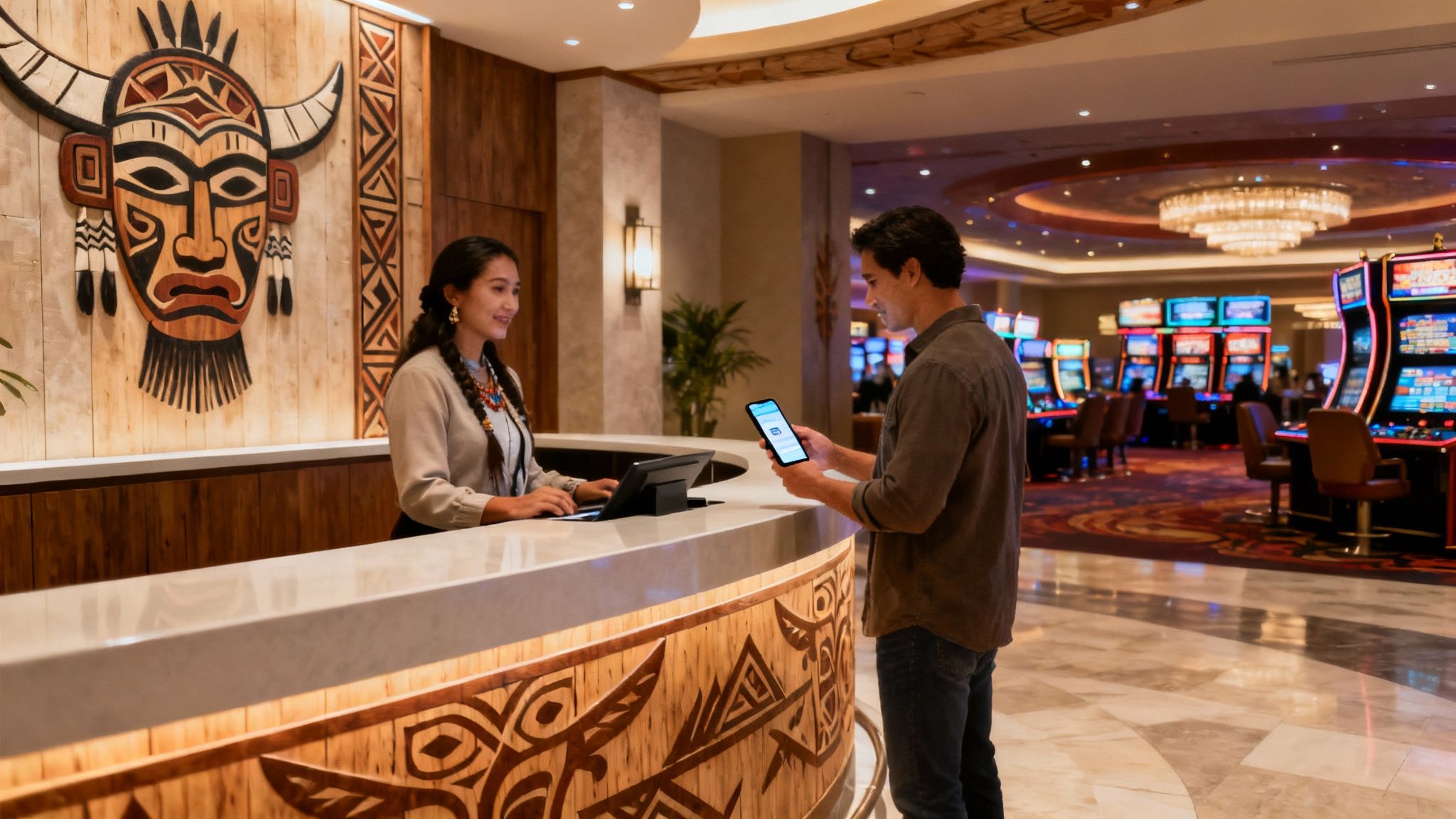
In every sector I've operated in, from tech marketplaces to luxury hotels, I've seen these critical junctures where new leaders emerge. Tribal gaming is standing at that crossroads. The pressure to modernize isn’t about chasing trends; it's a strategic imperative driven by a new benchmark for guest expectations. Today’s customers expect seamless, personalized, and frictionless experiences—the kind they get from every other digital leader in their lives.
Fortunately, the industry is operating from a position of immense financial strength. The National Indian Gaming Commission reported that tribal gaming generated a record $41.9 billion in 2023. With the total U.S. gaming industry projected to approach $115 billion in 2024, the capital is there to fund this critical evolution. This financial power presents a strategic opportunity to reinvest in a durable, tech-enabled future. You can analyze the broader market dynamics by exploring the data on the future of land-based gaming.
Why This Transformation Is a Strategic Imperative
The single greatest lever for long-term, profitable growth is the shift from siloed, legacy systems to a fully integrated digital operation. Your guests live in a world of one-click commerce and instant mobile services. They demand that same level of effortless interaction from you, from mobile check-in to cashless wagering. Failing to meet this standard is no longer a minor inconvenience; it is a direct threat to market share.
From my perspective as a growth strategist, this isn't an IT project—it's a core business strategy. The mission is to break down the silos between the hotel, F&B, and the casino floor to create a single, actionable view of every guest.
This unified approach delivers quantifiable, bottom-line results. It empowers you to:
- Drive Guest Lifetime Value: A deep, holistic understanding of guest behavior across your entire property allows for hyper-personalized marketing that maximizes loyalty and repeat business.
- Enhance Operational Efficiency: Integrating back-office systems eliminates data redundancy and equips your teams with the real-time intelligence needed for agile, data-driven decision-making.
- Increase Profitability: A frictionless, superior guest experience directly correlates to increased spend, while optimized operations reduce costs and improve margins.
To frame this strategic shift, let's break it down into its core components. The following table outlines the pillars that support a successful digital evolution in the tribal gaming sector.
Key Pillars of Tribal Gaming Digital Transformation
| Pillar | Description | Strategic Goal |
|---|---|---|
| Guest Experience | Engineer a seamless, personalized journey across all digital and physical touchpoints. | Increase guest satisfaction, loyalty, and lifetime value (LTV). |
| Operational Agility | Integrate systems for real-time, data-driven decision-making, workflow automation, and resource optimization. | Improve efficiency, reduce operating expenses (OpEx), and accelerate market responsiveness. |
| Data & Analytics | Centralize guest and operational data to extract actionable insights that drive marketing, service, and strategy. | Establish a single source of truth to power targeted marketing and optimize operations. |
| Technology Foundation | Build a modern, scalable, and secure IT infrastructure that supports current needs and enables future innovation. | Ensure reliability, security, and the capacity for future technological advancements. |
Ultimately, for sovereign nations, executing a deliberate and strategic digital transformation isn't about keeping pace. It's about establishing a commanding lead, securing a sustainable competitive advantage, and ensuring prosperity for generations to come.
Building Your Digital Foundation
I’ve spent my career architecting growth for companies in hospitality, gaming, and tech, and the formula for durable success is always the same: it's built on a solid foundation of integrated strategies, not a single piece of software. For any tribal gaming operation, that foundation rests on three pillars that must be developed in parallel: modernizing the guest experience, optimizing back-office operations, and fortifying enterprise security.
Think of it as a three-legged stool. If one leg is weak, the entire structure is unstable. A brilliant new loyalty app—a guest experience win—is rendered ineffective if your back-office can't process the data it generates. It becomes a catastrophic liability if it isn’t secure.
The Modern Guest Experience
Today's guests demand a frictionless, connected journey that seamlessly merges their digital and physical worlds. The experience you deliver can no longer begin at your front door. It must start on their device, long before arrival, and extend well beyond their departure. This is where tribal gaming digital transformation delivers its most visible return.
The primary objective is to eliminate friction at every touchpoint. This requires investing in tools that empower guests and make their visit effortless.
Here’s what that looks like in execution:
- Integrated Loyalty Apps: A mobile application that functions as a digital concierge, allowing guests to manage loyalty points, receive personalized offers, and book rooms or dining reservations in one place.
- Cashless Gaming Solutions: Digital wallets and mobile payment options on the casino floor reduce wait times, enhance security, and appeal directly to a younger, tech-native demographic.
- Personalized Marketing: Moving beyond generic email blasts is critical. True ROI comes from deploying targeted promotions based on a guest's actual gaming history, dining preferences, and on-property behavior. As I've detailed previously, a strategic marketing automation implementation is non-negotiable for executing this at scale.
Optimizing Back-Office Operations
While the guest experience commands the spotlight, your back-office operations are the engine that powers the entire enterprise. For decades, the industry has operated in silos—hotel, F&B, marketing, and gaming—each with its own disparate systems and data sets. This structure is the single greatest internal barrier to growth.
Breaking down these silos is not optional. The goal is to establish a single source of truth for the entire business. Integrating your Property Management System (PMS), Point of Sale (POS), and casino management platforms is what unlocks the ability to make intelligent, rapid decisions based on a complete operational picture.
From an executive standpoint, data integration is the key that unlocks genuine business intelligence. It’s the difference between guessing what a high-value guest wants and knowing, based on a unified view of every interaction they have with your property.
This integrated approach creates a direct path to revenue enhancement and operational efficiency. When your hotel system communicates with your gaming system, you can instantly identify a high-value player at check-in and empower your front-desk team to offer a strategic room upgrade. That is how you manufacture loyalty.
Fortifying Enterprise Security
Finally, none of these advancements matter without ironclad security. Every new digital touchpoint—from a mobile app to a cloud data warehouse—expands your attack surface. In an industry built on trust, a data breach is not an IT problem; it is a catastrophic business failure that can permanently erode guest confidence.
Security cannot be an afterthought. It must be architected into your digital strategy from day one.
This means a serious commitment to:
- Proactive Threat Monitoring: Continuously scanning your networks for vulnerabilities before malicious actors can exploit them.
- Robust Data Governance: Implementing strict policies that define who can access sensitive guest data and for what purpose.
- Employee Training: Ensuring your team is your first line of defense against phishing and other social engineering attacks.
These three pillars—guest experience, operational efficiency, and security—are not sequential steps. They are parallel strategic priorities. By developing them in tandem, you create a digital foundation that is resilient, agile, and secure enough to support sustainable growth for years to come.
Turning Data into Revenue and Unwavering Loyalty
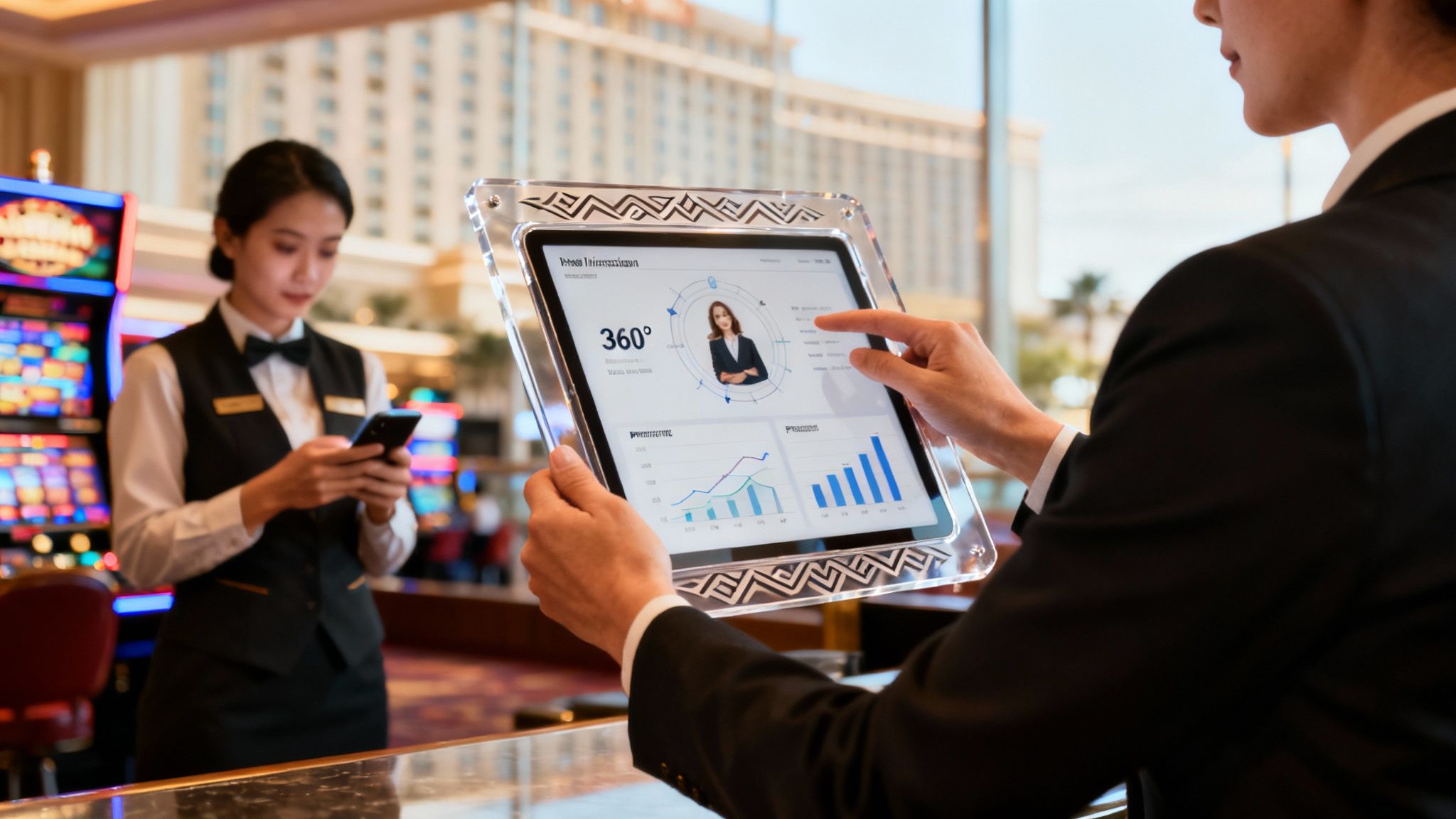
In every industry I’ve operated in, the market leaders share one common trait: they leverage customer data as a strategic asset. For tribal gaming, this means transforming the raw data generated across your property into your most powerful weapon for driving revenue. Every slot pull, hotel reservation, and restaurant bill is a data point. A successful tribal gaming digital transformation is about integrating these points to create actionable intelligence.
The objective is to move beyond rearview-mirror reporting. It's about building a comprehensive profile of each guest to predict their next move. That is the leap from merely managing a casino to proactively engineering its growth with data-backed decisions that directly impact the bottom line.
From Scattered Data to a Single Guest Story
Every guest interaction leaves a data trail. A player who exclusively plays a specific video poker machine, a couple that consistently dines at the steakhouse on their anniversary, a family that books the same cabana every summer. Individually, these are minor details. Aggregated, they form a rich, multidimensional narrative of that guest's preferences, behaviors, and true value to your enterprise.
The first and most critical action is to demolish the data silos between your departments. When the casino management system, hotel PMS, and restaurant POS systems are fully integrated, you unlock a new dimension of customer understanding. This is the foundation for creating the personalized, high-impact moments that convert a first-time visitor into a lifelong advocate.
My philosophy has always been to weaponize data by putting it in the hands of the people who can act on it. An executive dashboard is useful, but the real value is unlocked when a slot floor manager receives a real-time alert to personally greet a high-value player who just arrived. That’s how you operationalize data to build relationships.
The Power of Looking Forward with Predictive Analytics
Once you have that unified guest profile, you can begin to predict their next chapter. Predictive analytics leverages historical data to identify patterns and forecast future behavior. It provides a data-driven crystal ball for your marketing and operational strategies.
Here are a few ways this fundamentally changes the game:
- Identify Future VIPs: Move beyond tracking current spend. Predictive models can identify guests with a high propensity to become high-rollers, allowing you to cultivate that VIP relationship from day one.
- Preemptively Reduce Churn: The system can flag regular patrons whose visitation or spend has declined, signaling they are at risk of attrition. This allows you to deploy a targeted retention offer before they defect to a competitor.
- Deliver Hyper-Relevant Offers: Stop sending generic free-play coupons. Imagine sending a guest a complimentary dessert offer for their favorite restaurant, timed precisely for their next anticipated visit. That level of personalization makes guests feel understood and valued. To dig deeper into this, review our guide on AI-driven loyalty program optimization.
Building a Culture That Runs on Data
Technology is merely an enabler. The real transformation occurs when you build a culture where data informs every strategic decision. This must be driven from the top down. Tribal gaming leaders are increasingly investing in the right tech infrastructure not just to compete, but to dominate. Real-time analytics dashboards are becoming mission-control centers for governance, enabling leaders to identify revenue opportunities and monitor guest satisfaction instantly.
This data-driven mindset must permeate the entire organization. When your marketing, operations, and hospitality teams all have access to the right information at the right time, they are empowered to make smarter decisions that enhance the guest experience. This is how a casino evolves into a sophisticated, guest-centric enterprise that drives both revenue and enduring loyalty.
Securing Your Digital Transformation Journey
As a growth strategist, I am fundamentally optimistic about innovation. But as an executive, I am a pragmatist about risk. For digital transformation in tribal gaming, balancing these two is paramount. Every new cashless system, mobile app, or cloud data platform you implement also expands your casino’s digital attack surface, creating new vectors for potential threats.
A single cybersecurity breach does more than impact financials; it can shatter the trust you have built over decades with your guests and community. Security cannot be a checklist item tacked onto the end of a project. It must be woven into the very DNA of your digital strategy from inception.
Moving Beyond Compliance to Proactive Defense
For too long, cybersecurity was viewed through the lens of compliance. Meeting minimum regulatory standards was considered sufficient. In my experience, that passive, check-the-box mentality is a recipe for a crisis. Today's cyber threats are too sophisticated and persistent for a purely defensive posture.
A proactive security strategy is about seizing the initiative. It means actively hunting for vulnerabilities before adversaries can exploit them. It’s about architecting a resilient, multi-layered defense to protect your most critical assets: guest data, financial systems, and ultimately, tribal sovereignty.
This forward-leaning approach requires several key components working in concert:
- Continuous Monitoring: Implementing systems that provide 24/7 visibility into your network traffic, using AI-driven tools to detect anomalies that could signal an attack.
- Regular Penetration Testing: Engaging ethical hackers to stress-test your defenses. They identify weaknesses so you can remediate them before they are discovered by criminals.
- A Solid Incident Response Plan: Establishing a clear, rehearsed playbook for the moment a breach occurs. A rapid, coordinated response can dramatically mitigate the damage.
The Human Element in Cybersecurity
Technology is a powerful tool, but it's only half the equation. I have seen multi-million dollar security systems circumvented by a single, well-crafted phishing email. Your employees are your first line of defense, but without proper training, they can become your greatest vulnerability.
Building a culture of security awareness is non-negotiable. This isn’t a one-time training session. It’s a continuous program of engaging education that teaches your team to recognize social engineering tactics, identify suspicious activity, and understand their critical role in safeguarding the enterprise. An alert and empowered team is a formidable human firewall.
In my role, I constantly look for force multipliers—strategies that yield an outsized return on investment. In cybersecurity, collaboration is the ultimate force multiplier. No single organization, regardless of size, can defend as effectively alone as it can as part of a community.
The Strategic Value of Collaboration
This is where sovereign operators possess a unique and powerful advantage. The American Gaming Association notes that 80% of casino operators have increased their cybersecurity spending, yet many struggle to keep pace with evolving threats. This is where collaborative entities like the Tribal Information Sharing and Analysis Center (Tribal-ISAC) become indispensable. With over 300 members from more than 100 federally recognized tribes, the Tribal-ISAC serves as a nerve center for sharing real-time threat intelligence and defensive strategies.
When one member identifies a new attack vector, that intelligence is immediately disseminated across the network, allowing hundreds of other operators to fortify their defenses before they are targeted. This collective intelligence transforms security from an isolated burden into a shared mission. Protecting your assets, your guests, and your sovereignty is the primary objective, and collective defense is your strongest posture. You can learn more about how this framework helps secure tribal casino operations.
A Phased Roadmap for Successful Implementation
As a growth strategist, I’ve seen brilliant initiatives collapse under the weight of poor execution. The "big bang" approach—attempting to overhaul everything at once—is a reliable path to chaos, team burnout, and failure. The key to a successful tribal gaming digital transformation is not speed; it's sustained, strategic momentum.
You build that momentum with a phased roadmap. It’s about delivering value in manageable increments, proving ROI at each stage, and building organizational buy-in for the next phase. Embarking on this journey without a clear plan is a high-risk gamble. A roadmap transforms vision into an executable strategy, enabling you to manage change, mitigate risk, and ensure every dollar invested supports your long-term goals of sovereignty and prosperity.
Phase 1: Foundational Assessment and Alignment
You wouldn’t build a resort without a blueprint, and the same applies to your digital architecture. This initial phase is dedicated to discovery and strategic planning. The temptation to jump directly to new technology is strong, but skipping this foundational work is a classic error that results in projects misaligned with core business needs. This step is non-negotiable.
The objective is to gain a brutally honest assessment of your current state and define precisely what success looks like for your enterprise.
- Technology and Process Audit: Map everything from your casino management system to back-of-house finance. Identify bottlenecks, data silos, and outdated processes that impede performance.
- Define Clear Business Goals: Be specific and quantitative. Are you targeting a 15% increase in non-gaming revenue? A 20% lift in loyalty program enrollment? Every subsequent initiative must be tied to a measurable business outcome.
- Secure Leadership Buy-In: This transformation must be championed from the highest level. Build a compelling business case for tribal leadership, clearly articulating the vision, required investment, and projected returns.
Phase 2: Pilot Programs and Quick Wins
With your blueprint established, the next step is to build credibility and generate excitement. This is achieved by launching small-scale, high-impact pilot programs that deliver visible "quick wins." This approach proves the concept in a controlled environment and is the most effective way to convert skeptics into advocates.
Consider launching a new guest loyalty app or a limited cashless gaming trial on a section of the floor. These are ideal pilots because they directly impact the guest experience, and their success is easily measured. When you can draw a direct line from a new digital tool to increased guest satisfaction or higher revenue, you earn the political and financial capital required for larger-scale projects.
As a strategist, I always advise clients to target a win that marketing can celebrate, finance can quantify, and operations can see. A successful pilot isn't just a technical proof-of-concept; it's a powerful internal marketing tool for the entire transformation journey.
This visual timeline highlights how innovation, security, and collaboration are interwoven throughout the entire process.
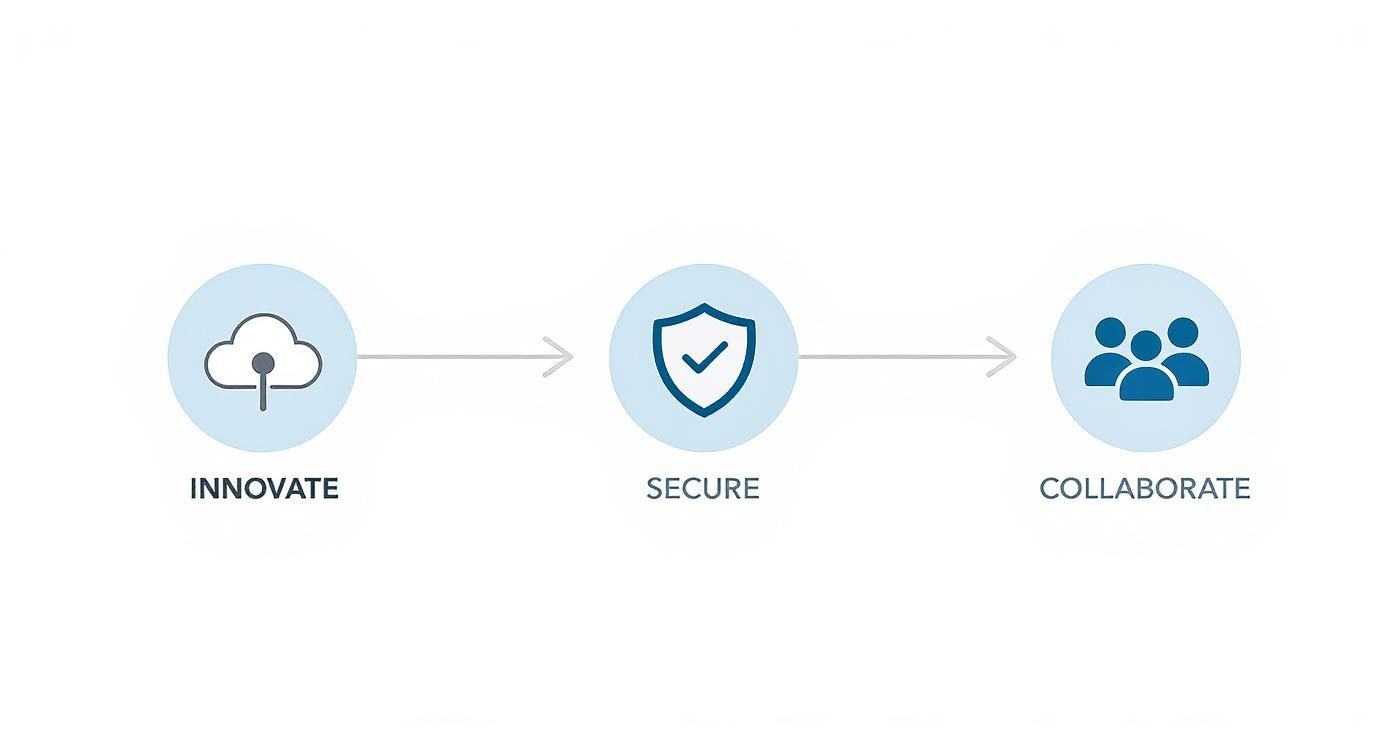
As the graphic illustrates, sustainable progress requires a balanced approach. New initiatives must be protected by robust security and driven by cross-functional collaboration at every stage.
Phase 3: Scaled Integration Across the Enterprise
Once your pilot programs have proven their value, it’s time to scale. This phase focuses on expanding successful initiatives across the entire property and—most critically—integrating your disparate systems. This is where you finally break down the data silos that have hindered your operational intelligence.
The focus shifts from standalone projects to building a fully integrated ecosystem. This means connecting your Property Management System (PMS), casino management platform, and all Point-of-Sale (POS) systems to create the coveted 360-degree guest view. While this is a significant undertaking, it is the step that unlocks the most powerful and durable competitive advantages.
Phase 4: Continuous Optimization and Innovation
Digital transformation is not a project with an end date; it is a permanent state of evolution. The final phase is about embedding a culture of continuous, data-driven improvement into the DNA of your organization. Your newly integrated systems will generate a wealth of data that must be constantly analyzed to identify new opportunities.
This requires establishing cross-functional teams to regularly review performance dashboards, test new strategies, and continuously refine operations. It represents a fundamental shift from a rigid, project-based approach to a more agile and iterative one. This culture of constant optimization is what will ensure your tribal gaming enterprise not only adapts to the market but leads it for generations to come.
To help visualize this journey, here is a high-level overview of the roadmap we've just walked through.
Digital Transformation Implementation Roadmap
This table summarizes the four key phases, outlining the core objectives, activities, and success metrics for each stage of your transformation journey.
| Phase | Key Objectives | Primary Activities | Success Metrics |
|---|---|---|---|
| 1: Assessment | Understand the current state, define future goals, and achieve leadership alignment. | Conduct tech/process audits, set clear business KPIs, and present the business case to stakeholders. | Approved strategic plan, defined budget, and stakeholder consensus. |
| 2: Pilot Programs | Prove value, build momentum, and test new solutions in a controlled environment. | Launch "quick win" projects like a new mobile app or cashless gaming trial. | Positive ROI from pilots, increased employee/guest adoption, and internal support. |
| 3: Scaled Integration | Expand successful pilots and connect disparate systems across the enterprise. | Integrate PMS, CMS, and POS systems; deploy enterprise-wide solutions. | Unified guest profiles, improved operational efficiency, and cross-departmental data sharing. |
| 4: Optimization | Foster a culture of continuous, data-driven improvement and ongoing innovation. | Establish analytics teams, monitor dashboards, and implement an agile testing framework. | Consistent improvement in KPIs, increased speed to market for new ideas, and higher ROI. |
Following a structured, phased approach de-risks the process and ensures that each step builds on the success of the last, paving the way for sustainable growth.
Leading the Change and Breaking Down Silos
I've driven growth in SaaS, gaming, and hospitality for decades, and the one immutable truth is this: the greatest barrier to transformation is never technology. It's always people and process. A successful tribal gaming digital transformation is contingent on decisive leadership and a deliberate, sustained effort to dismantle the operational silos that isolate marketing, IT, gaming, and hospitality.
Technology is a tool; a shift in culture is the real catalyst for change. You need a leader who can articulate a compelling vision of the future and align every department around that shared objective. Without that unified direction, you end up with fragmented projects, wasted capital, and internal friction that paralyzes progress.
Fostering a Culture of Collaborative Innovation
The first strategic move is to pull key leaders out of their departmental bunkers and into a single room focused on a common set of problems. True collaboration isn't born from status meetings; it's forged by creating cross-functional teams tasked with solving specific, high-value business challenges.
Consider the launch of a new loyalty app. That team cannot consist solely of IT and marketing. It must include gaming operations experts who understand player behavior, hospitality staff who know the on-property guest journey, and finance to model and track the ROI. When these diverse teams achieve a shared victory, they become powerful evangelists for change, proving to the rest of the organization that collaboration drives results.
The most effective growth strategies I’ve executed were not my ideas alone. They emerged from empowering teams on the front lines—those closest to the customer and the operation—to experiment, share insights, and own the outcomes.
This approach transforms resistance into ownership. When your people are co-architects of the future, their investment in its success is absolute.
Communicating the Vision and Empowering Your People
Once the unified vision is established, it must be communicated relentlessly. Your teams need to understand the why behind the change. This isn't about installing new software; it's about securing the tribe’s long-term prosperity, strengthening sovereignty, and creating more valuable careers for community members.
This narrative is the bedrock of any successful change management initiative. It provides the context and motivation needed to navigate the inevitable challenges. A strong, consistently communicated vision is essential. For those looking to refine this message, exploring strategies for branding and content marketing can provide a robust framework for both internal and external communications.
Ultimately, the future of tribal gaming will not be determined by who has the most advanced technology. It will be defined by the leaders who can successfully integrate their people, data, and processes into a single, agile organization. The objective is to ensure every dollar of technology spend directly serves the deeper mission of community strength and economic independence.
FAQ on Tribal Gaming Digital Transformation
Leaders in tribal gaming consistently ask me the same critical questions when contemplating a modernization initiative. It is a significant undertaking, and these concerns are valid. Here are direct, executive-level answers to the most common questions I encounter.
Where Do We Start This Journey?
You start in two places simultaneously. First, conduct a rigorous and honest assessment of your current technology stack and operational workflows. Second, get laser-focused on your desired business outcomes. Forget the technology for a moment—what are you trying to achieve?
With those answers, identify a pilot project that can deliver a "quick win." A new guest loyalty app or a limited cashless gaming trial are excellent candidates. They provide a tangible, measurable ROI quickly, which builds the political capital and organizational momentum required for larger, more complex initiatives.
How Do We Get Buy-In From Resistant Teams?
This is a leadership challenge, not a technology problem. The mandate for change must come from the top. To execute on the ground, create cross-functional teams that blend expertise from different departments—marketing, IT, gaming operations, and F&B.
When you extract people from their functional silos and give them a shared objective, their perspective shifts. Skepticism transforms into advocacy once they witness firsthand how new tools can help them achieve their goals and make their jobs more impactful.
What Is the Single Biggest Mistake to Avoid?
The most catastrophic error is treating this as an IT project. It is not. It is a fundamental business strategy transformation that impacts every facet of your resort.
If it becomes siloed as "the IT department's initiative," it is destined to fail. Success requires strong, visible leadership and deep engagement from every department. You are not just installing software; you are re-architecting your business to compete and win in a fundamentally different market landscape.
We've addressed the most pressing concerns, but you may have specific questions related to your own operation. The table below covers a few additional common queries.
| Question | Answer |
|---|---|
| How long does a digital transformation take? | It's not a project with a fixed end date. Foundational system integrations might take 12-24 months, but the operational mindset of continuous improvement is permanent. |
| Do we need to hire new people? | Not necessarily. The initial focus should be on upskilling your current team. You may need to hire for specialized roles (e.g., data scientists), but investing in existing talent is critical for cultural adoption. |
| What's a realistic budget? | This varies significantly. Rather than a single monolithic budget, approach it by funding specific, high-ROI initiatives. A phased investment strategy is more manageable and financially prudent. |
| Can we do this without disrupting our guests? | Absolutely. A well-architected rollout is designed to be seamless. Pilot programs and phased implementations are key to testing new systems and gathering feedback with minimal impact on the guest experience. |
Hopefully, these answers provide a clearer, more strategic perspective. The key is to view this not as a technological hurdle, but as a strategic opportunity to build a more profitable and resilient enterprise.
Ready to architect the next stage of your growth and ensure your digital transformation delivers measurable results? At MGXGrowth, we partner with executive leadership to break down silos and align strategy with execution. Discover how we can help you build a more profitable and resilient future.
